
Commercial Cold Room Cooling Load: From Design Inputs to Unit Selection
Two cold rooms of the same size can require different refrigeration capacities. A room receiving warm batches with frequent door openings operates differently from one storing pre-chilled stock. Start by estimating heat through each surface, air infiltration, product load and internal gains, then select equipment at the actual design conditions.
01Define Operating Conditions First
Separate room air temperature from product temperature
Record the target air temperature, incoming and target product temperatures, and the time allowed to reach the target. Ask operations whether the room will hold pre-chilled stock or pull down the product temperature.
Document conditions at each surface
Provide room dimensions and insulation data, and identify what lies beside each wall, above the ceiling and below the floor. A wall adjoining an air-conditioned space can have a different heat gain from one bordering a hot loading area.
02Account for Insulation and Air Infiltration
Heat flow through surfaces
A simplified estimate multiplies each surface area by its overall heat-transfer coefficient and the temperature difference across it. The designer uses data for the assembly and considers joints and thermal bridging alongside panel thickness.
Door openings and humidity
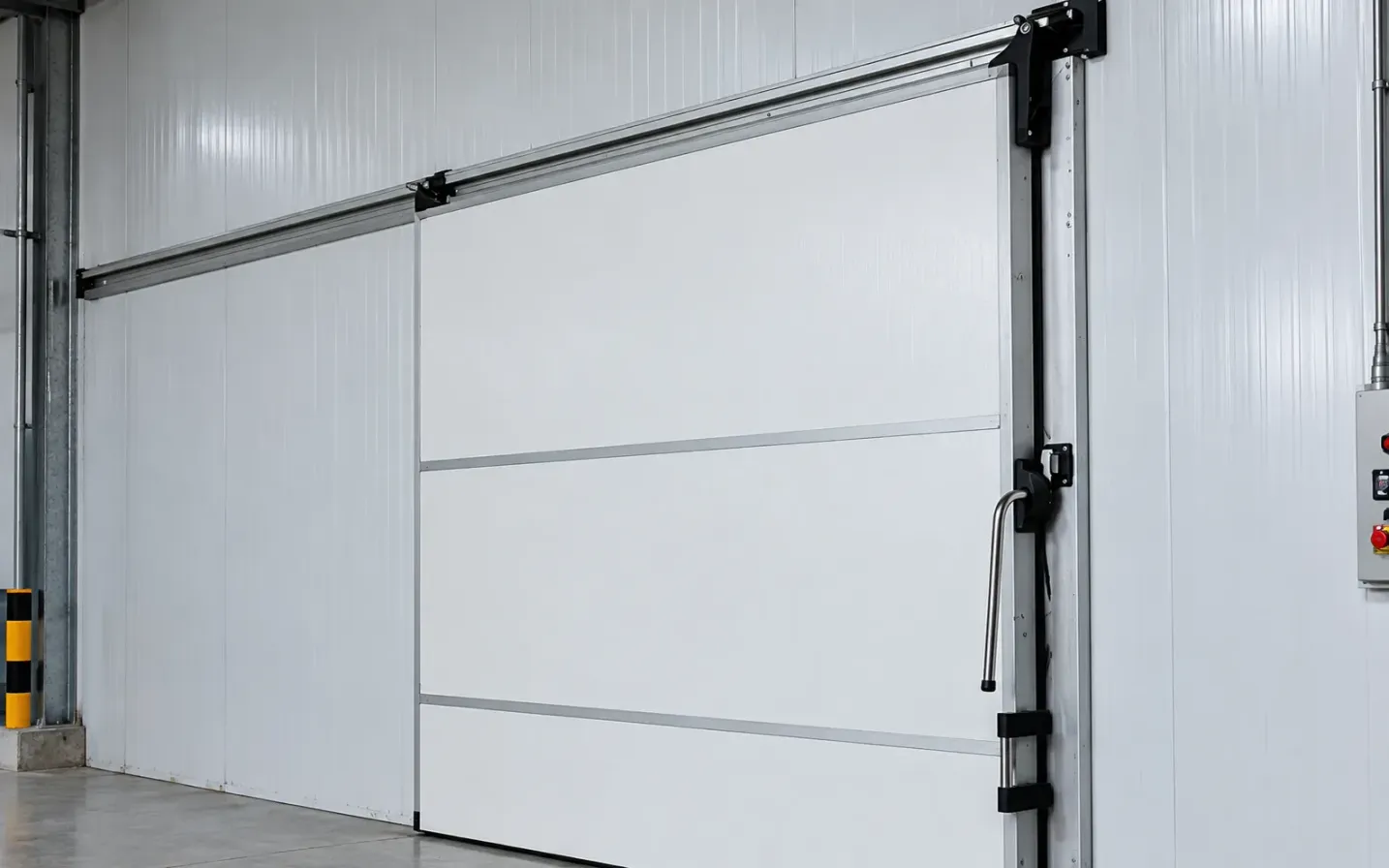
Record door size, opening frequency, duration and peak periods. Warmer air enters through open doors, and moisture adds load as it condenses or freezes under relevant conditions. The Danfoss cold room calculation guide explains how air exchange and humidity affect the estimate.
03Calculate the Incoming Product Load
Use batch mass and pull-down time
Record the largest batch entering in a shift, its product type, packaging and arrival temperature. If the room will freeze the product, the calculation accounts for the phase change as well as cooling above and below the freezing point.
An illustrative product load
Assume a 200 kg batch with a specific heat capacity of 3.5 kJ per kilogram per degree Celsius, cooled by 10°C in eight hours without freezing. That is 7,000 kJ, or about 0.24 kW on average. The figure covers the product in this example. Packaging and the other room loads are additional.
04Add Internal Gains and Available Run Time
Lighting, people and equipment
Provide occupancy and duration, lighting power and run time, and details of equipment operating inside the room. Account for evaporator fan heat using a calculation basis consistent with the supplier’s capacity data.
Allow for periods without cooling
Identify defrost and downtime, when batches arrive and whether arrivals coincide with door openings. Similar daily energy loads can require different unit capacities if cooling must take place over a shorter window or peak loads coincide.
05Compare Unit Capacity on the Same Basis
Ask for the equipment selection point
Capacity changes with evaporating and condensing conditions. Ask each supplier for net capacity at the design selection point, evaporator data and the defrost method. Compare offers on the same basis. See cold and freezer room services for design and installation scope.
Check air distribution against the layout
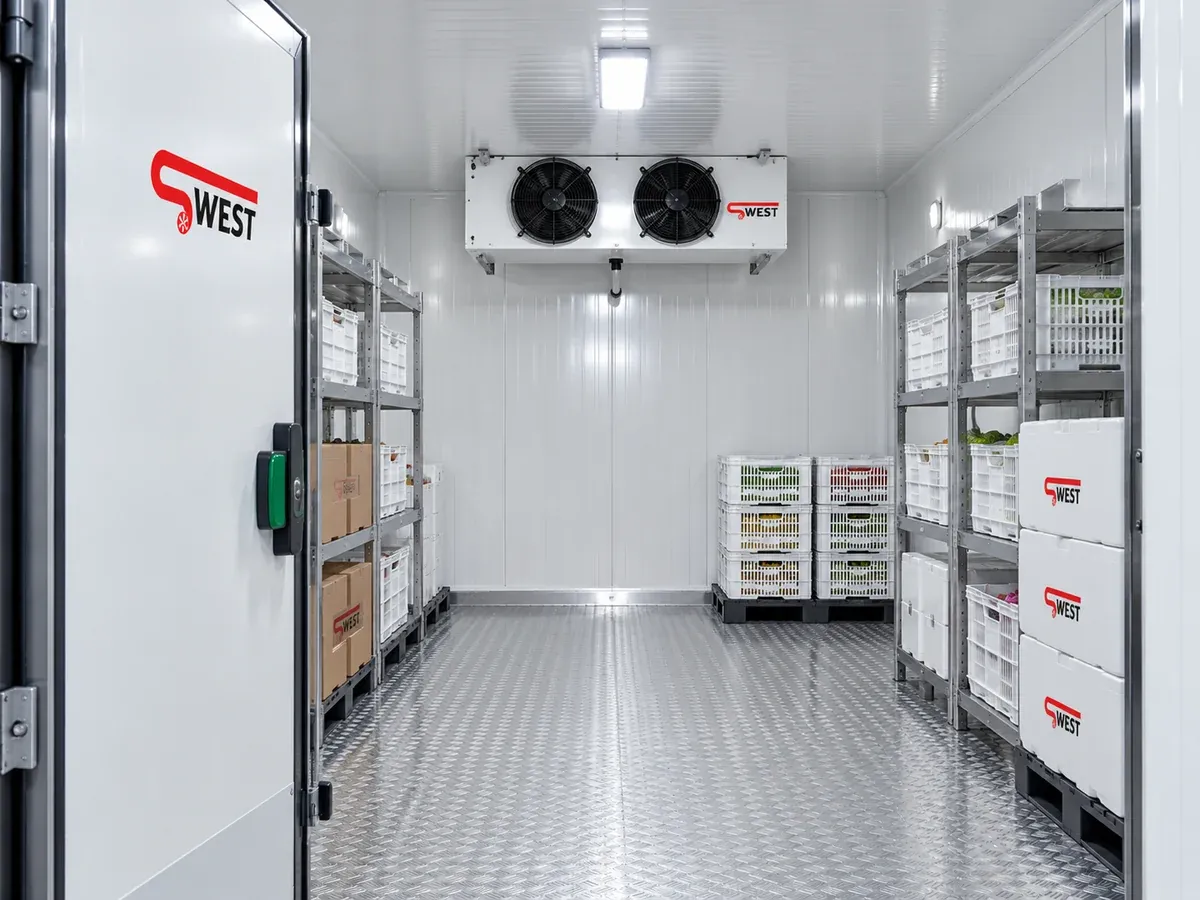
Share rack locations, storage height and aisle dimensions so the designer can review airflow around the stock. Ask the supplier to show evaporator and sensor locations and identify areas that may need measurements at commissioning.
06Prepare the Request for Quotation
Send an operating profile with the drawing
Attach dimensions, insulation and door details, product type, batch weight and temperatures, and required pull-down time. Include the site location, loading schedule and any available defrost window.
Ask for the assumptions in writing
Request a load breakdown, equipment selection point and an itemized scope before approving an offer. Submit the details through the cold room quotation form and flag items that require a site survey or measurement.
Have a project like this? Our engineering team in Jeddah runs the load calculation, proposes the solution, and comes back with a detailed quotation within one working day.
Read next
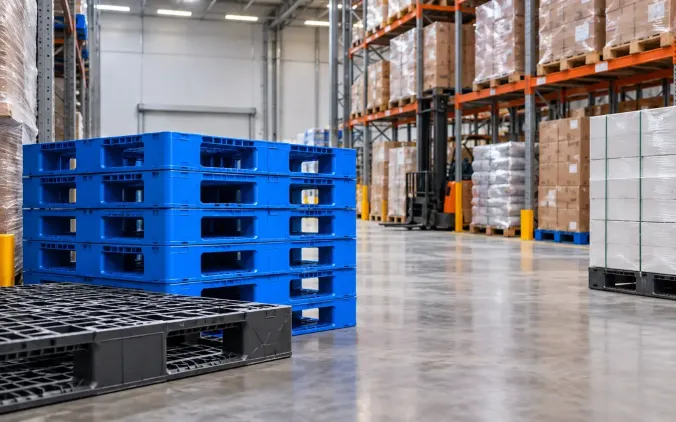
Steel vs Plastic Pallets for Refrigerated Warehouses: A Buyer's Comparison
Compare steel and plastic pallets by storage method, load, racking, handling, cleaning and lifetime cost.
Read the article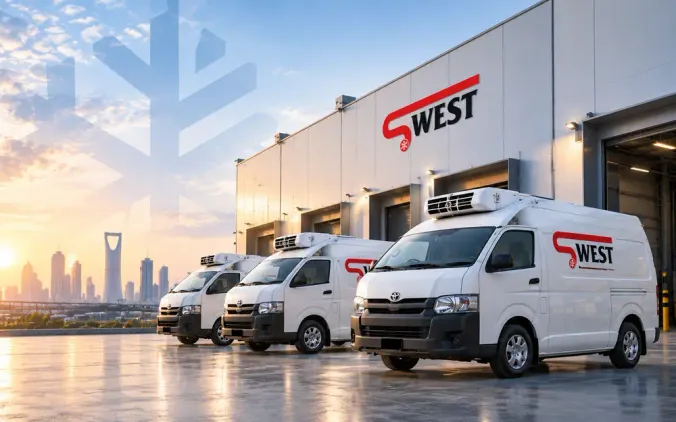
Preparing Pharmaceutical Transport Vehicles in Saudi Arabia
Review medicinal product conditions, insulation, refrigeration, monitoring and vehicle qualification before requesting a conversion quotation.
Read the article