
Pharmaceutical Cold Rooms: Storage Requirements, Mapping and Qualification
Start a pharmaceutical cold-room project in Saudi Arabia with the products and the way your warehouse handles them. Stock that arrives cold and ships the same day creates a different handling pattern from stock held for weeks. Agree those inputs with your quality team and turn them into design requirements and measurable acceptance tests.
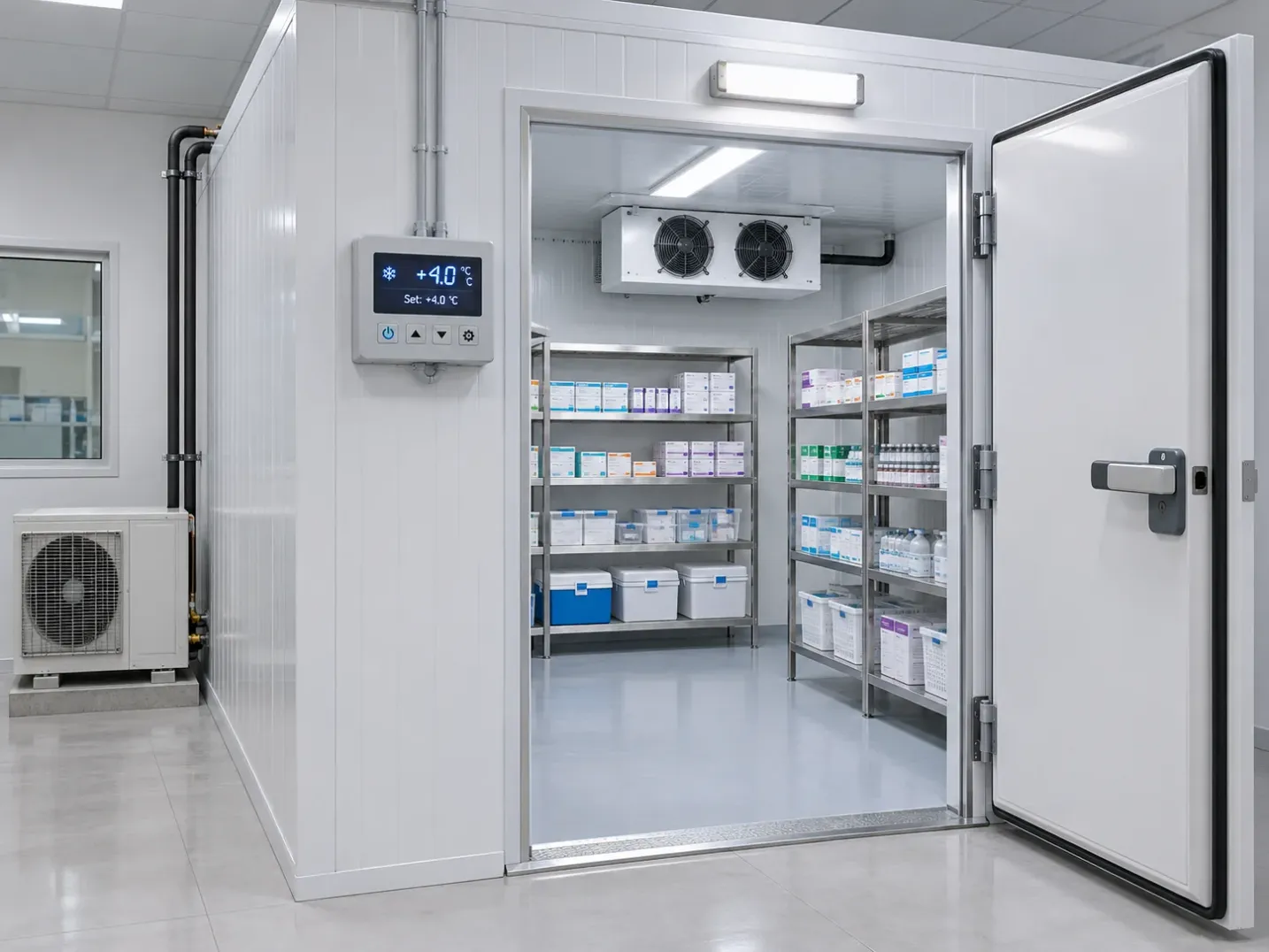
01Start with products and warehouse workflows
Collect storage instructions by product
Gather the approved storage instructions for each product, including temperature limits and humidity requirements where specified. Identify products that can share a storage range and those that need a separate area, and record peak inventory for each group.
Describe the route from receiving to storage
Map the journey from receiving to shelf placement. Expected staging times, door openings and peak loads help the designer understand the conditions the room has to handle in operation.
02Turn storage requirements into a layout
Coordinate shelving with airflow
Give the designer the rack layout and loading heights before evaporator locations are finalised. Keep the routes and clearances specified in the design open and identify those areas in the operating procedures.
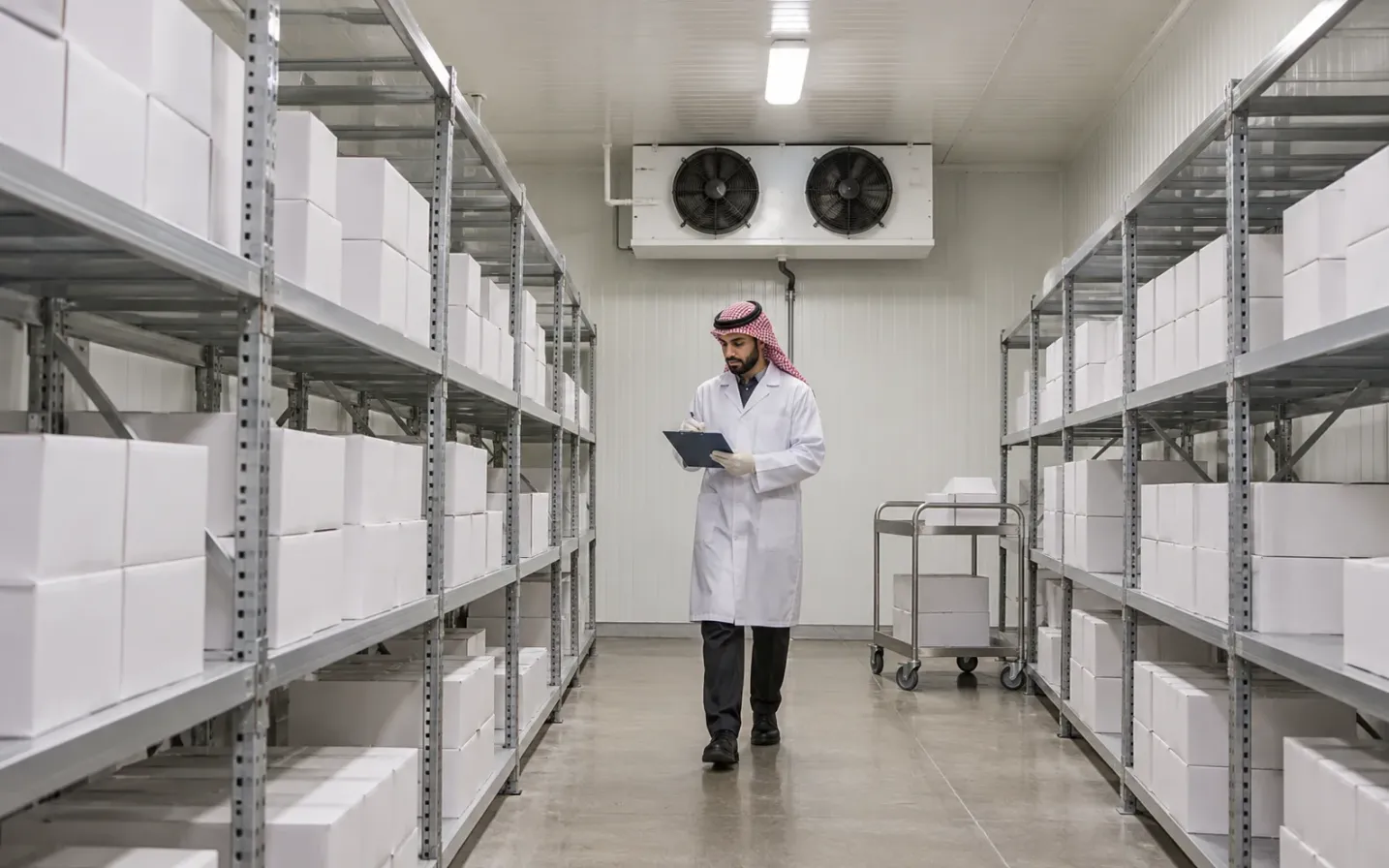
Define storage boundaries
Show where shipments are received and where goods await a quality decision. Agree how to segregate and track those goods under the quality team’s approved procedure. Review cold and freezer room design services when defining the construction scope.
03Measure temperature variation across the room
Run a temperature mapping study
Place temporary loggers at different positions and heights to measure variation and identify locations most likely to go outside the limits. Agree testing conditions and loading patterns with the quality team, and record door activity and ambient conditions during the study.

Use mapping results for ongoing monitoring
Base permanent sensor locations on the mapping results and the risk assessment. Document each sensor’s identity, location and calibration schedule. Define when changes to shelving or refrigeration equipment call for reassessment. See the SFDA Good Storage and Distribution Practices guideline.
04Test the alarm workflow before operation
Specify alert limits and escalation
Set alarm thresholds against storage conditions and quality procedures. Agree who receives out-of-hours alerts, how they log time and readings, and who responds when the first contact is unavailable.
Exercise the power-loss and recovery procedure
Run a controlled test approved by the quality team before loading stock. Confirm whether logging and alerts continue as designed and which checks follow restoration. Identify qualified alternative storage for a transfer if needed.
05Plan the response to a temperature excursion
Match the record to affected stock
Name the person who retrieves the temperature history and the person who matches the excursion window to product locations and quantities. Record actions and staff notifications alongside the data that supports the quality team’s decision.
Apply the approved quality procedure
Segregate affected stock under the approved procedure while the quality team evaluates the event using product information, duration and available readings. Give authorised staff access to retrieve the records when an excursion occurs.
06Specify qualification deliverables in the quote
Ask for a reviewable handover record
Allocate responsibility for temperature mapping, sensor calibration, alarm testing and reporting in the quote. Identify who approves qualification results and trains operators, and list work that depends on the building contractor separately.

Send the inputs the designer needs
Share site dimensions, product storage conditions, daily volumes, expected door openings, monitoring and backup power needs, and qualification deliverables. Request a pharmaceutical cold-room quotation using these inputs.
Have a project like this? Our engineering team in Jeddah runs the load calculation, proposes the solution, and comes back with a detailed quotation within one working day.
Read next

Steel vs Plastic Pallets for Refrigerated Warehouses: A Buyer's Comparison
Compare steel and plastic pallets by storage method, load, racking, handling, cleaning and lifetime cost.
Read the article
Preparing Pharmaceutical Transport Vehicles in Saudi Arabia
Review medicinal product conditions, insulation, refrigeration, monitoring and vehicle qualification before requesting a conversion quotation.
Read the article