
Refrigerated vehicle conversion: what gets checked before your van goes into service
Before you choose a refrigeration unit, you need to know what an inspector will look at. Most of what fails on a refrigerated vehicle is the insulation and the paperwork, not the unit on the roof.



01The body comes before the unit
Insulation sets the unit capacity, not the other way round
The usual order is backwards: the customer buys a unit, then looks for insulation to match it. The right order is to calculate the body's heat load first — its surface area, its insulation thickness, the temperature of the goods, how often the door opens on a round — and then choose the unit from that. A large unit on a poorly insulated body runs without stopping, burns extra fuel, and still never reaches the set point.

The floor and the doors are where it actually leaks
Walls are rarely the problem. Leakage happens at the door frame, at the floor-to-wall joint, and around the drains. Door gaskets are a consumable that daily use destroys, and an uninsulated floor carries chassis heat straight into the load. Check those three before you check anything else.

02Choosing the refrigeration unit
Chilled or frozen? That decision comes before the model
The difference is not power, it is operating range. A unit designed to hold zero will never reach −18 °C however long it runs, and will damage itself trying. Fix the operating range, the length of the round and the worst outside temperature you expect, then choose the model that covers that range with at least 20% in hand.
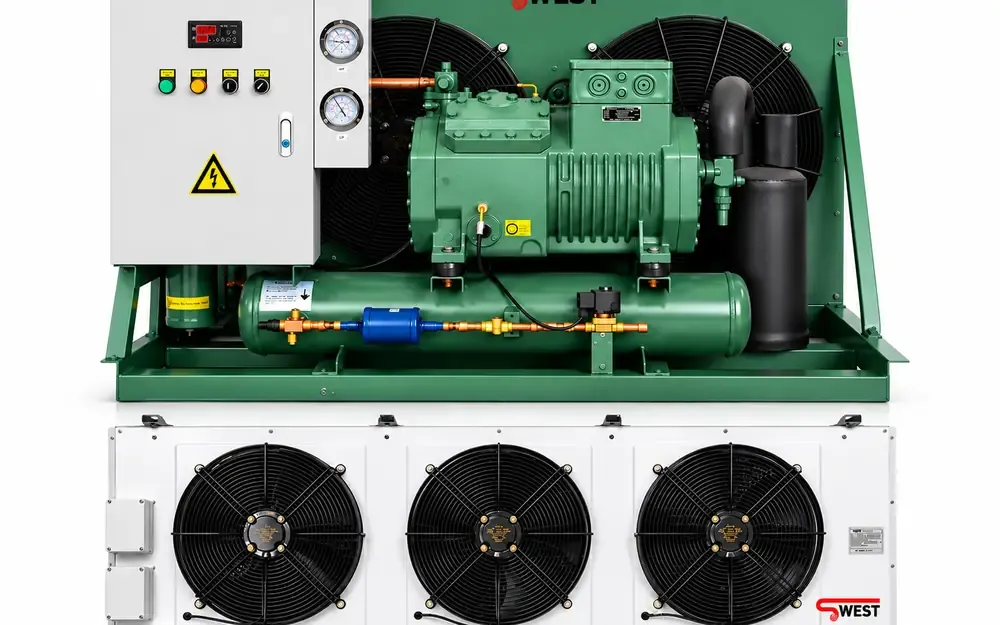
A standby unit is not a luxury in pharmaceutical distribution
Vehicles carrying medicines or vaccines need to hold temperature with the engine off. An electric standby unit keeps the set point during overnight loading and while the vehicle waits at delivery points. In ordinary food distribution it is a convenience; in pharmaceutical transport it is a requirement.

03Compliance and handover
What the inspector actually looks at
The check starts with the inner surface: a cleanable material, no cracks, no sharp corners where residue can sit. Then a thermometer readable from outside, a working drain, sound gaskets, and a plate showing the operating range. Most findings are written against those items, not against the refrigeration unit.

The paperwork starts on installation day, not on inspection day
Keep the conversion certificate, the temperature test report and the service log from day one. At inspection those documents are asked for alongside the vehicle, and their absence holds up the permit even when the conversion itself is sound. We hand over every vehicle with a complete file, ready to submit.

Have a project like this? Our engineering team in Jeddah runs the load calculation, proposes the solution, and comes back with a detailed quotation within one working day.
Read next
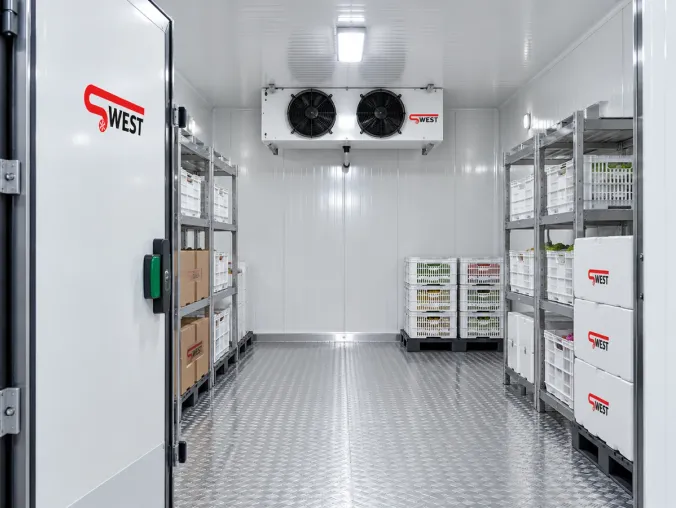
Sandwich panels: how to choose the right thickness for a cold room
Thickness is not a number you pick off a catalogue. It falls out of an equation between the operating temperature you need, the climate outside, and the electricity bill you will pay every month for the life of the room.
Read the article
Servicing vehicle refrigeration units: the failure never comes out of nowhere
Most of the failures that reach our workshop are not sudden. They are six months of running with a blocked condenser or a low refrigerant charge — and the bill arrives all at once, usually on the worst possible day.
Read the article