
Servicing vehicle refrigeration units: the failure never comes out of nowhere
Most of the failures that reach our workshop are not sudden. They are six months of running with a blocked condenser or a low refrigerant charge — and the bill arrives all at once, usually on the worst possible day.

01What wears a unit out on the road
Heat and dust work together against you
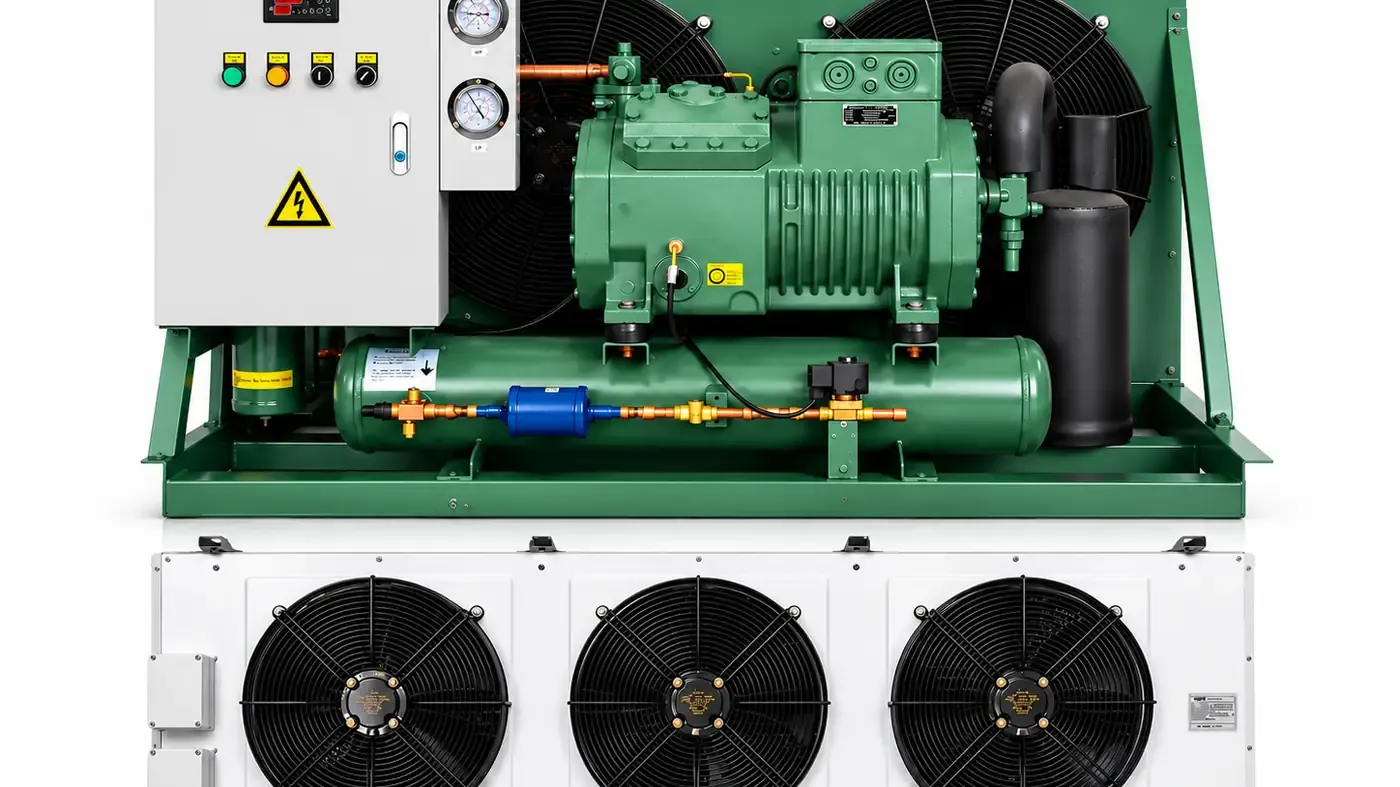
The condenser dumps heat into air that is 45 °C or hotter. When dust blocks its fins it loses the ability to reject that heat, discharge pressure climbs, and the compressor runs under permanent strain. In Jeddah and Riyadh four weeks is enough to build a layer that measurably cuts performance. Washing the condenser is not cosmetic.

The heat load starts with the cargo, not the unit
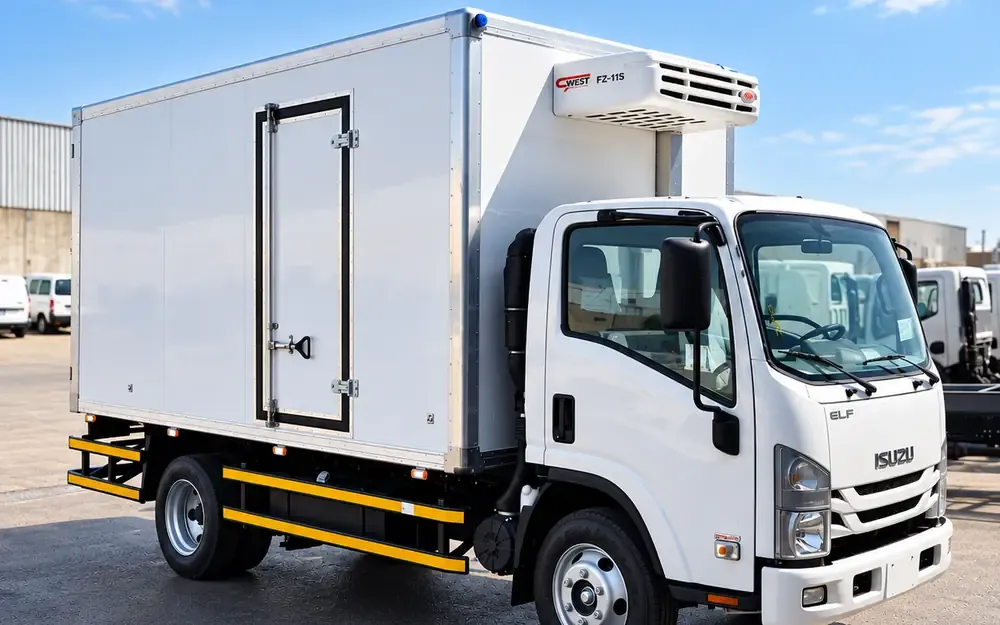
Loading warm goods into a cold body forces the unit to run flat out for hours. It is designed to hold a temperature, not to pull one down from ambient. Pre-cool the body before loading, load goods that are already at temperature, and compressor running hours roughly halve.
02A service schedule you can actually keep
Weekly: condenser, gaskets, drain
Five minutes is enough. Wash the condenser fins with low-pressure water along the fins rather than against them, wipe the door gaskets and check them for splits, and make sure the drain is clear. Those three prevent most of the call-outs we receive.

Every 250 running hours: charge, belts, oil
Measure the refrigerant charge and the operating pressures, check belt tension and wear, and check the compressor oil level. A gradual loss of refrigerant does not stop the unit — it makes it run longer and cool less, which is exactly what hides the problem until it grows. Record the readings at every visit so you read the trend, not the number.

03When to stop and call the workshop
Three signs that do not wait
A new metallic noise from the compressor, ice building up on the evaporator inside the body, or a unit running continuously without reaching its set point. Each one means the failure has already begun. Continuing to run after any of them turns a small repair into a compressor replacement.

A service contract costs less than one day off the road
The arithmetic is simple: a day of downtime for a distribution vehicle costs the load, the missed round, and the customer who did not receive. A scheduled service contract covers planned visits, genuine parts and response priority, for an annual cost below that single day.
Have a project like this? Our engineering team in Jeddah runs the load calculation, proposes the solution, and comes back with a detailed quotation within one working day.
Read next
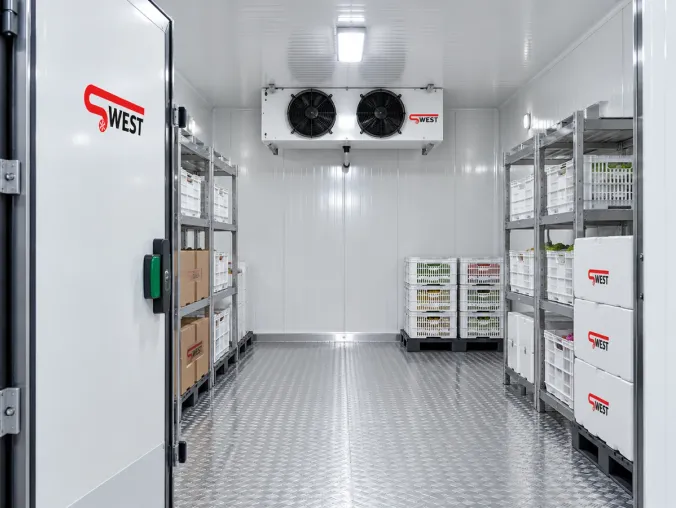
Sandwich panels: how to choose the right thickness for a cold room
Thickness is not a number you pick off a catalogue. It falls out of an equation between the operating temperature you need, the climate outside, and the electricity bill you will pay every month for the life of the room.
Read the article
Refrigerated vehicle conversion: what gets checked before your van goes into service
Before you choose a refrigeration unit, you need to know what an inspector will look at. Most of what fails on a refrigerated vehicle is the insulation and the paperwork, not the unit on the roof.
Read the article