
Direct Drive and Electric Standby for Refrigerated Vehicles: When Do You Need Both?
Two vehicles with identical insulated bodies may need different ways of running refrigeration. One unloads as soon as it returns, while another waits loaded at the depot before departure. To decide whether electric standby is worth specifying, identify where and when your vehicle stops, where compatible power is available, and which cargo conditions it needs to maintain.
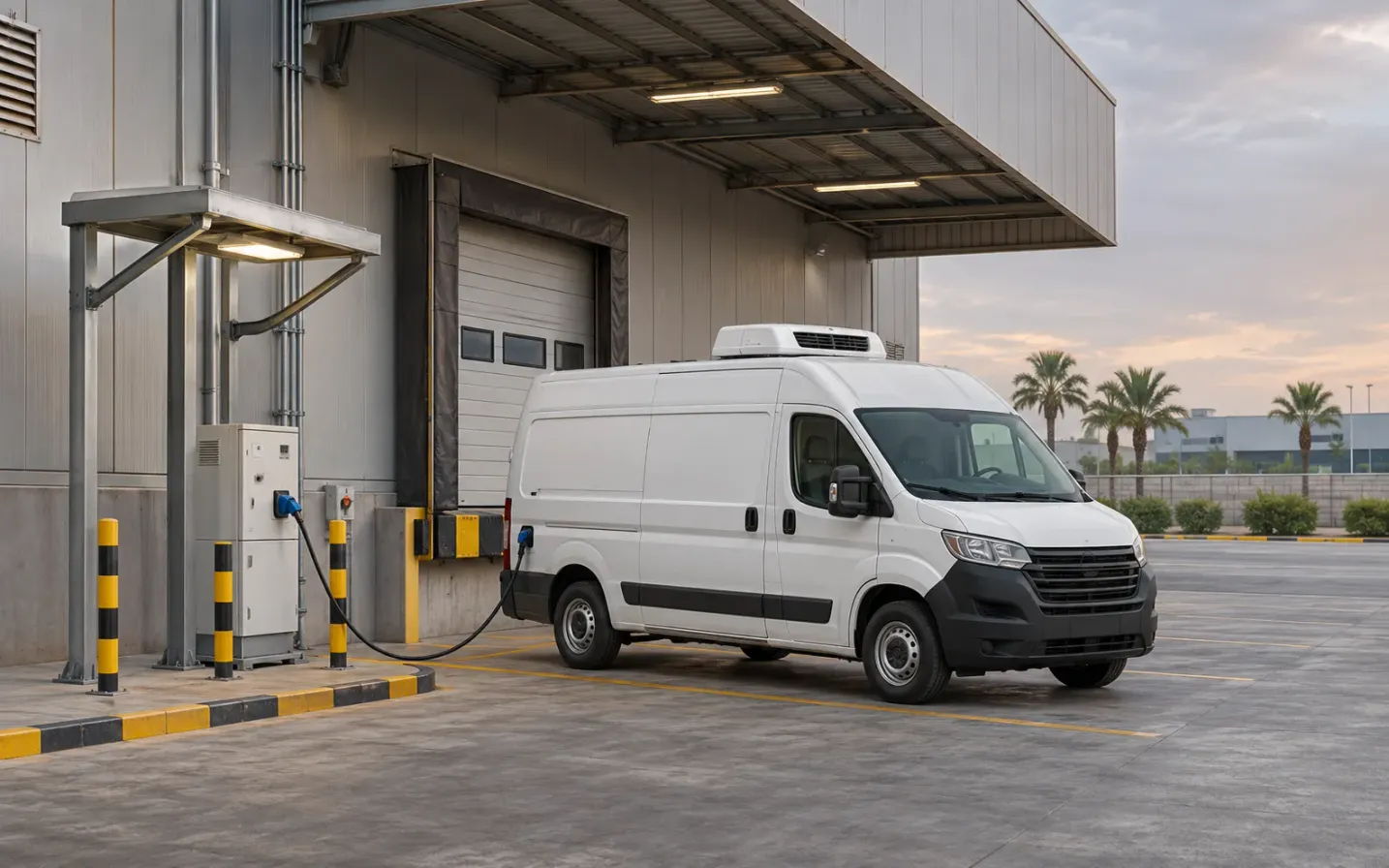
01Understand what powers each operating mode
Direct drive with the engine running
In a conventional direct drive system the vehicle engine powers the refrigeration compressor. With the engine off, that power source stops. How long the cargo area stays within its required range depends on insulation, cargo and surrounding conditions.
Electric standby while parked
Some models run on a compatible external electrical supply with the vehicle parked and its engine off. One model can support both road operation and plugged-in standby. The Thermo King V-Series manual gives an example of that arrangement.
02Identify which stops matter for the cargo
Review what happens at the depot
Record when the vehicle reaches the dock, loads and leaves, and whether goods remain on board at the end of a route. Regular loaded waiting combined with compatible power makes standby worth evaluating.
Account for stops away from the depot
A route may include repeated stops at shops where power is unavailable. Record their duration and door-opening pattern, and ask the supplier to assess this part of the route too. Review vehicle insulation and refrigeration services when defining the scope.
03Plan the power point before ordering
Request connection requirements for the proposed model
Ask for the manufacturer’s voltage, frequency, phases, protective device, grounding and plug requirements. Give that information to a qualified electrician to verify the site before use. Specify who supplies the cable and who prepares the connection.
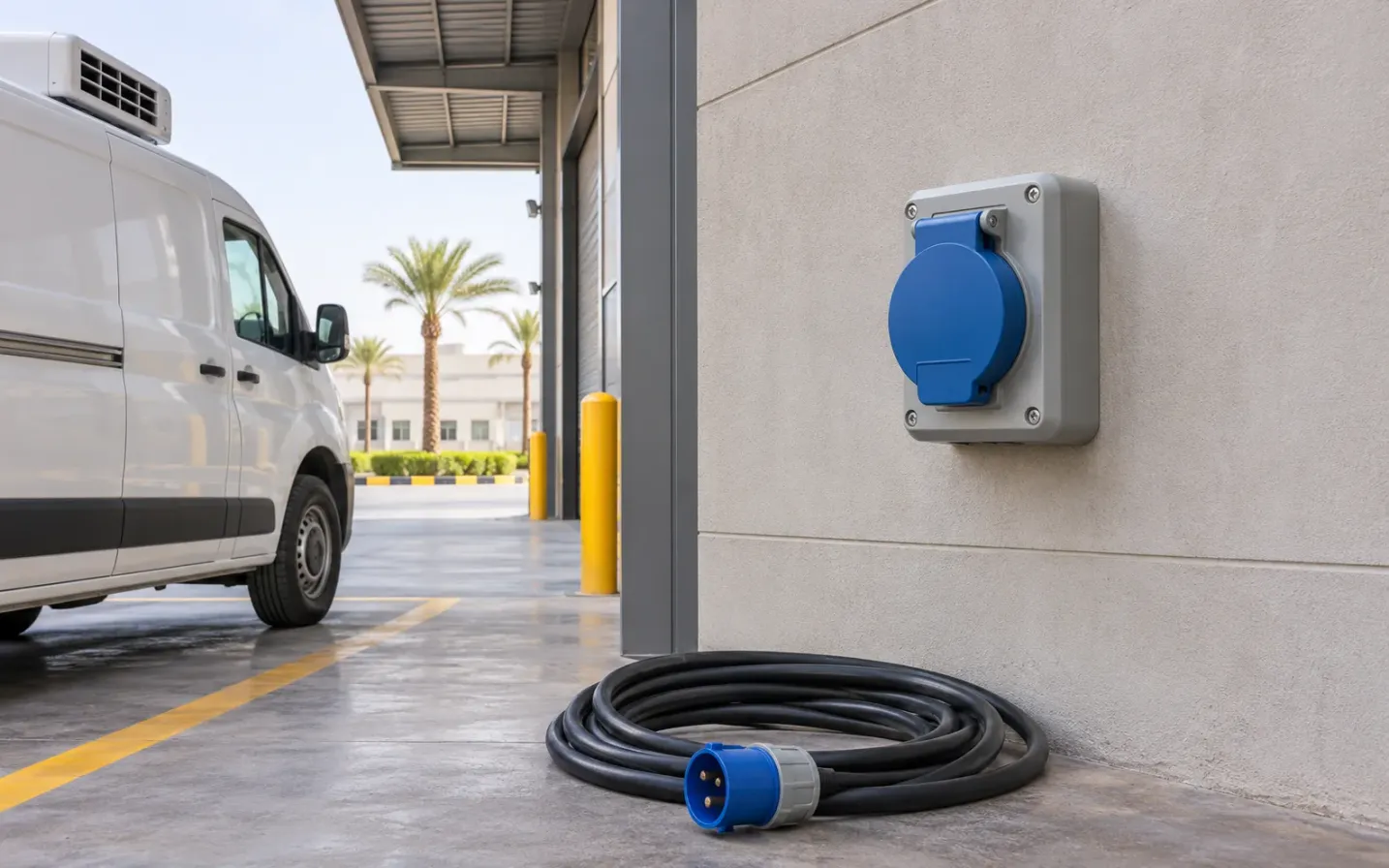
Plan for the bays your fleet will use
Map each power point to an actual parking bay. Review cable routing, vehicle movements and site protection requirements. Make disconnection according to the manufacturer’s instructions and a departure check part of the operator’s routine.
04Compare performance in both modes
Request separate road and standby performance data
State the required setpoint and ambient conditions in the brief. Ask the supplier for refrigeration capacity in both road and standby modes under stated conditions, then check that the proposed model covers each duty.
Include pre-cooling in loading procedures
Define how the body is prepared before loading and the condition in which goods arrive. If standby will pre-cool the body, agree a readiness criterion and who verifies it at loading, accounting for the temperature of the incoming goods.
05Price the site and vehicle together
Separate the option price from site preparation
Ask for a breakdown of the unit, fixed electrical work, cable, installation and servicing. Compare against expected stationary hours and the number of vehicles and bays that can use standby in practice.
Agree on a response to loss of power
Assign responsibility for reviewing readings and applying the approved procedure if a loaded vehicle loses shore power. Include shift handover and alert acknowledgement where the unit or monitoring platform supports them.
06Test both modes at handover
Document the changeover from road to standby
Ask the supplier to run the unit with the engine operating, then test it on the designated electrical supply after parking, following the manufacturer’s instructions. Record door position, ambient conditions and cargo-area readings, and review connection and disconnection with the driver.

Send the duty cycle with your quotation request
Provide the vehicle type, insulated body dimensions, operating temperature and cargo, plus loading and stop times and available electrical supplies. Request a vehicle refrigeration quotation and state how the unit needs to run at every stage.
Have a project like this? Our engineering team in Jeddah runs the load calculation, proposes the solution, and comes back with a detailed quotation within one working day.
Read next
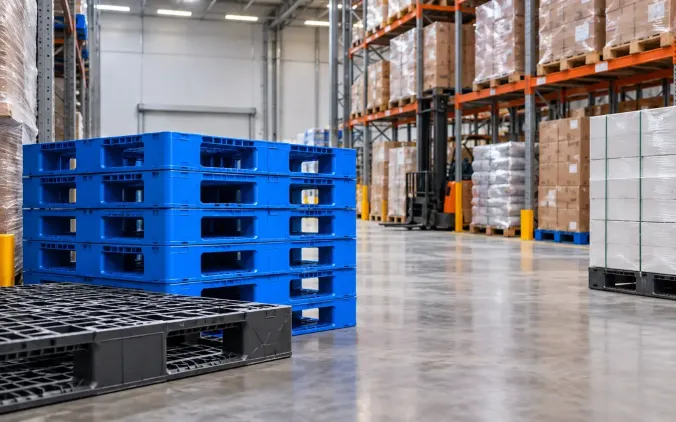
Steel vs Plastic Pallets for Refrigerated Warehouses: A Buyer's Comparison
Compare steel and plastic pallets by storage method, load, racking, handling, cleaning and lifetime cost.
Read the article
Preparing Pharmaceutical Transport Vehicles in Saudi Arabia
Review medicinal product conditions, insulation, refrigeration, monitoring and vehicle qualification before requesting a conversion quotation.
Read the article