
Choosing Vehicle Refrigeration for Fresh Fruit and Vegetable Transport
Fresh produce requires transport conditions appropriate to each commodity; the same setpoint does not suit every product. Choosing refrigeration starts with actual cargo data before vehicle body size or unit model is specified.
01Start with product characteristics
Required temperature
Collect commodity lists and storage conditions from suppliers or the quality team. Some products are sensitive to excessive cooling or require different humidity, so do not assume a universal setting.
Mixed-load compatibility
Review whether products can travel together based on temperature, humidity and compatibility. Separate loads or vehicles may be preferable to forcing a single setpoint.
02Loading temperature and precooling
Product precooling
FAO refrigerated transport guidance highlights precooling and compatible holding conditions. Establish whether the cargo arrives pre-chilled or requires pull-down.
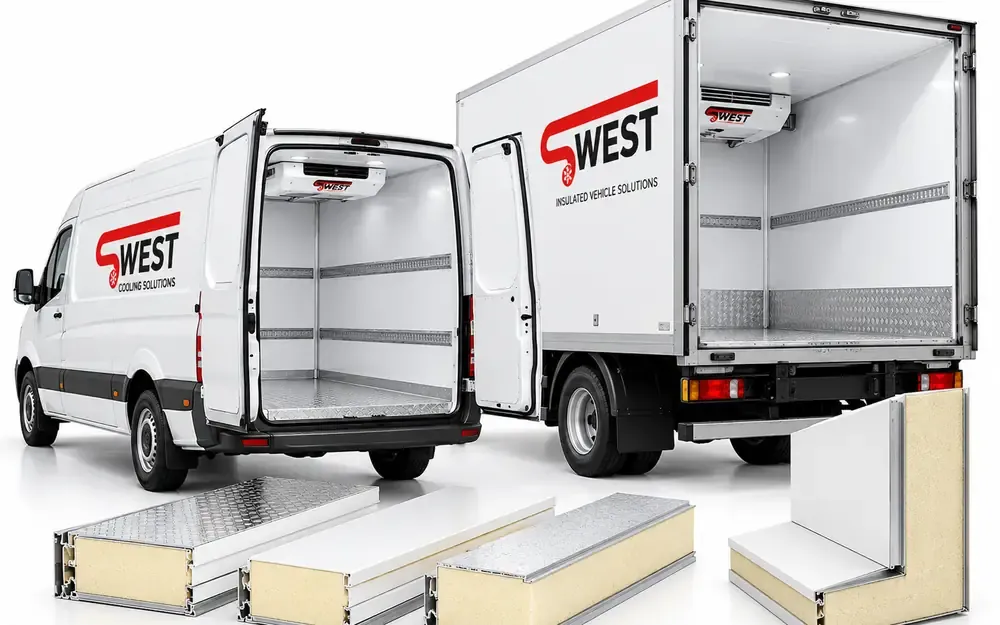
Prepare the cargo compartment
Coordinate compartment preparation to the required transport conditions before the cargo arrives. Assess capacity at the actual ambient conditions, route and cargo requirements.
03Design the insulated compartment
Insulation continuity
Review walls, roof, floor, door and junction details. Insulation selection depends on volume, duty conditions and allowable vehicle weight.
Air distribution
Arrange cartons and pallets to keep supply and return airflow paths unobstructed. Usable payload space is not simply the geometric volume of the body.
04Match the refrigeration unit to the route
Throughput and distance
Provide quantity, arrival temperature, journey length and expected weather. Unit selection accounts for temperature difference, incoming product load and door activity.
Stops and operation
Consider delivery frequency, engine-off periods and the need for continued cooling. Evaluate additional operating modes against the vehicle and route requirements.
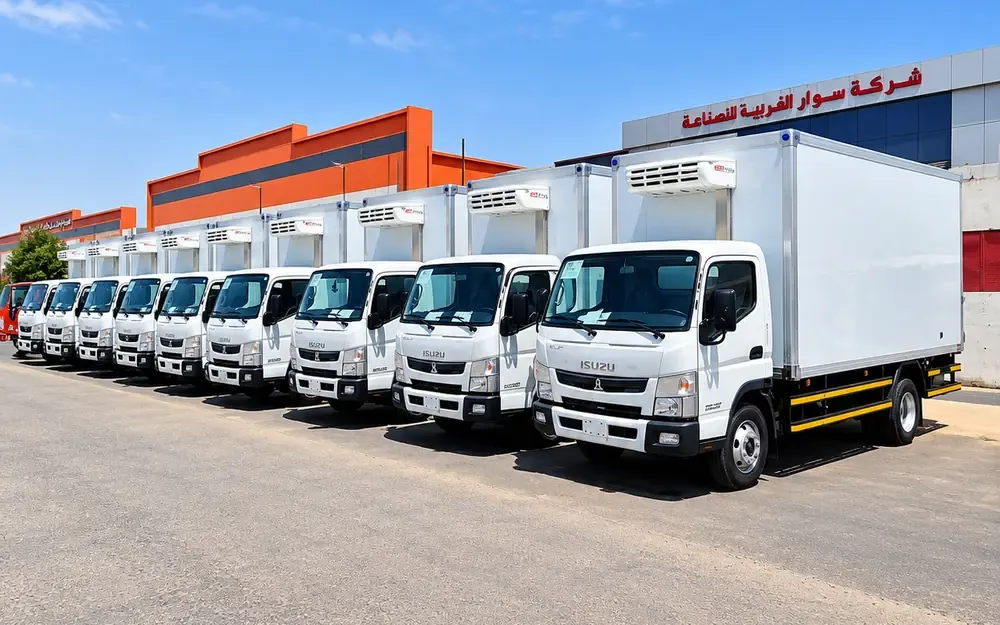
05Monitoring and cleaning
Temperature records
Define compartment and product temperature records according to quality requirements. Locate measuring devices at representative points and check their operation before distribution.
Cleanable surfaces
Specify liners and flooring suitable for cleaning and anticipated moisture. Check door and surface condition before trips.
06Request a vehicle conversion
Compare quotations
Ask for the body, insulation, unit, installation, tests and maintenance scope to be itemized. Review refrigerated vehicle conversion services and the catalogue for technical discussion.
Quotation inputs
Send vehicle type, product list, quantity, loading temperature, journey profile and number of stops to SWEST to assess a suitable refrigeration system.
Have a project like this? Our engineering team in Jeddah runs the load calculation, proposes the solution, and comes back with a detailed quotation within one working day.
Read next
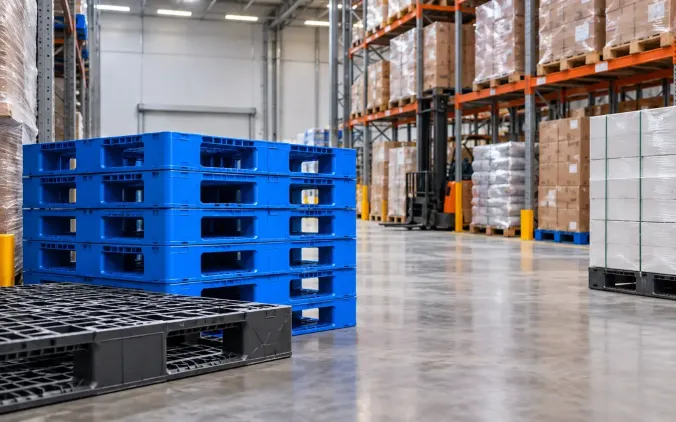
Steel vs Plastic Pallets for Refrigerated Warehouses: A Buyer's Comparison
Compare steel and plastic pallets by storage method, load, racking, handling, cleaning and lifetime cost.
Read the article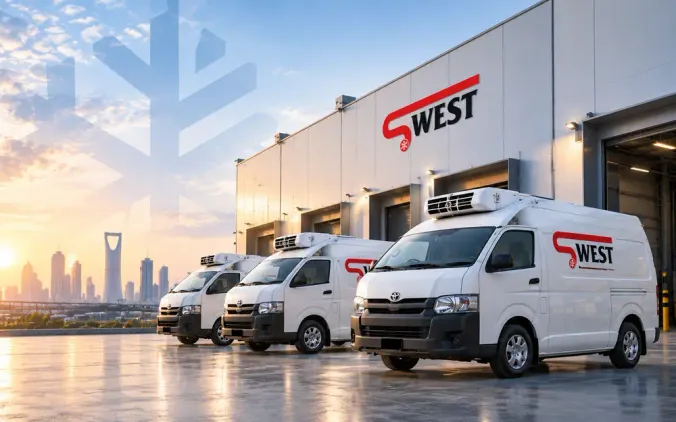
Preparing Pharmaceutical Transport Vehicles in Saudi Arabia
Review medicinal product conditions, insulation, refrigeration, monitoring and vehicle qualification before requesting a conversion quotation.
Read the article