
Central HVAC Ductwork Handover: Leakage Testing and Air Balancing
Before closing the suspended ceiling, document duct routes, confirm access to service points, and agree on which sections the contractor will test. A leakage test measures the air escaping from a duct section at a specified pressure. Air balancing checks how much air reaches each zone when the system runs. Request both results when the project scope calls for them.
01Review the Drawings Before Installation
Identify design airflow
Request the design airflow schedule for each terminal and review supply, return and outdoor air routes separately. If a tenant fit-out changes the layout, ask the designer to update the schedule before approving the duct routes.
Coordinate with other trades
Check duct routes against ceiling heights, lights, sprinklers and other services. Ask the designer to review deviations that add bends or change duct size, particularly where they change the pressure the fan must deliver.
02Inspect Before Ceiling Closure
Check joints and supports
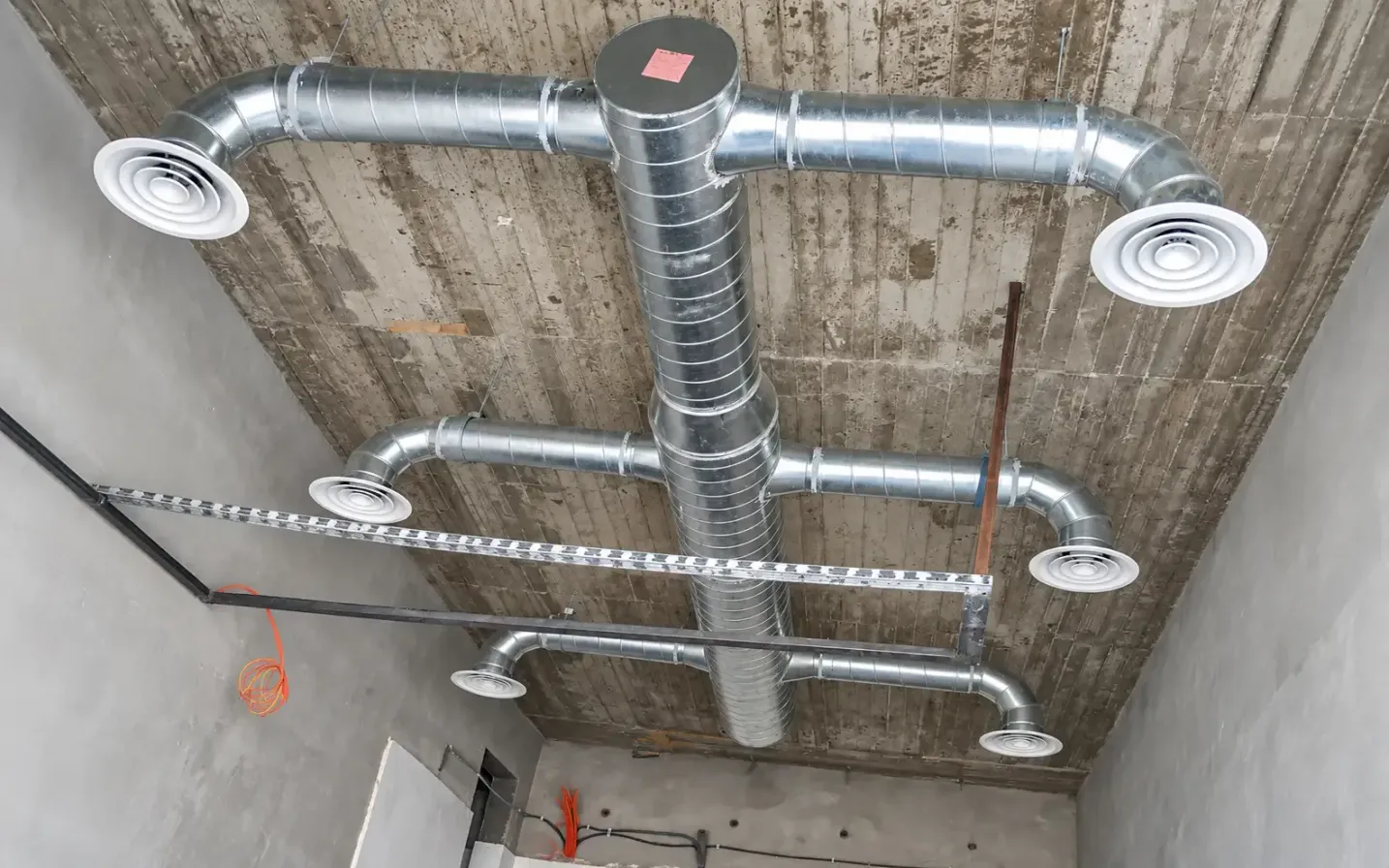
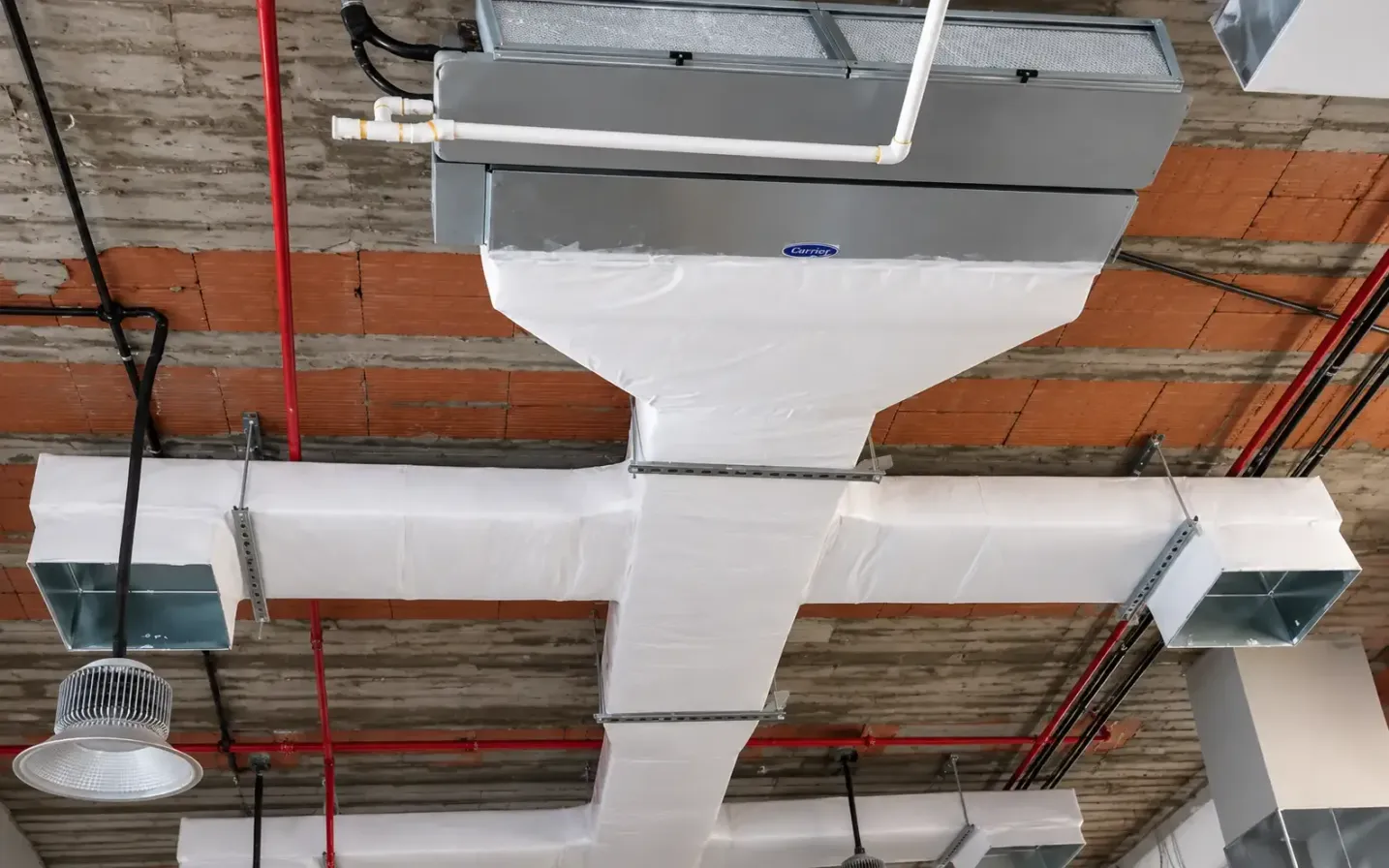
Review joint fastening, supports and sealing at connections and branches against the drawings and specifications. Ask for photos of concealed sections with the location of each photo marked on the drawing.
Preserve access for maintenance
Make sure access doors and adjustable dampers remain reachable after ceiling installation. Coordinate access points with the finishing team and check that insulation joints preserve the continuity specified for the outer layer.
03Test Duct Leakage
Define the section, pressure and acceptance limit
Record the test section, its boundaries, the specified pressure and the maximum permitted leakage in the test plan. The SMACNA duct leakage test manual describes test setup and equipment.
Document readings and retest repairs
Record the actual pressure, measured leakage, units and result against the agreed limit. If the section needs repair, document the location and retest before covering joints that require inspection.
04Balance Airflow After Startup
Compare each terminal with its design value
The balancing team takes measurements once the system is ready to run, then adjusts ducts and dampers in line with the design. Ask for a schedule showing each terminal ID, design airflow and final reading so you can compare the results across zones.
Investigate remaining deviations
If a terminal still delivers too little air, verify damper position, obstructions, fan settings and filter condition. Keep a record of operating conditions alongside the final readings to make later checks repeatable.
05Keep the Handover Documents
As-built drawings and test reports
Request as-built drawings showing branches, access points and changes, plus leakage and balancing reports included in the agreed scope. Use the same identifiers on the drawings and test reports so maintenance staff can locate each item.
Assign responsibility for outstanding work
Agree on a list that assigns each item a location, owner and reinspection date. Distinguish duct fabrication and installation from testing and balancing in the quote, and specify who supplies each report.
06Prepare Your Request for Quotation
Send drawings and project status
Attach ceiling and HVAC drawings and the terminal schedule if available. State whether this is a new build or work in an existing premises. See central HVAC and ductwork services to identify the work to include.
Specify deliverables before comparing quotes
List the insulation scope, sections to be tested, and whether the offer should include balancing and as-built drawings. Send these details to SWEST for a quotation so bidders price the same scope.
Have a project like this? Our engineering team in Jeddah runs the load calculation, proposes the solution, and comes back with a detailed quotation within one working day.
Read next

Steel vs Plastic Pallets for Refrigerated Warehouses: A Buyer's Comparison
Compare steel and plastic pallets by storage method, load, racking, handling, cleaning and lifetime cost.
Read the article
Preparing Pharmaceutical Transport Vehicles in Saudi Arabia
Review medicinal product conditions, insulation, refrigeration, monitoring and vehicle qualification before requesting a conversion quotation.
Read the article