
Cold Room Doors: How to Choose Hinged or Sliding
A suitable cold room door lets goods and equipment pass, closes properly and matches the room’s operating conditions. Choosing hinged or sliding depends on movement space, handling methods and daily access, rather than room size alone. Define the clear opening, movement direction, insulation, closing arrangement and safety features before asking for a quotation.
01Start with the goods route and clear opening
Measure the largest load on its handling equipment
Review the loaded trolley or pallet dimensions, rather than the carton alone. Record load height and width, approach and turning movements, and whether people will work near the opening. Ask the supplier to confirm suitable movement clearance on the layout. Distinguish the building opening, frame dimensions and usable clear opening after installation. Two quotations using the same nominal dimension may provide different passage space if they define the measurement differently.
Review movement in both directions
A kitchen receiving small trolleys may have space for a swinging leaf. A busy warehouse aisle needs an arrangement that accommodates handling equipment, goods and people. Map entry, exit and waiting areas before approving the door location. For a new room, coordinate these decisions with the cold room and freezer room design. Choosing the door after fixing storage positions and aisles can introduce avoidable changes.
02What changes the hinged-versus-sliding decision?
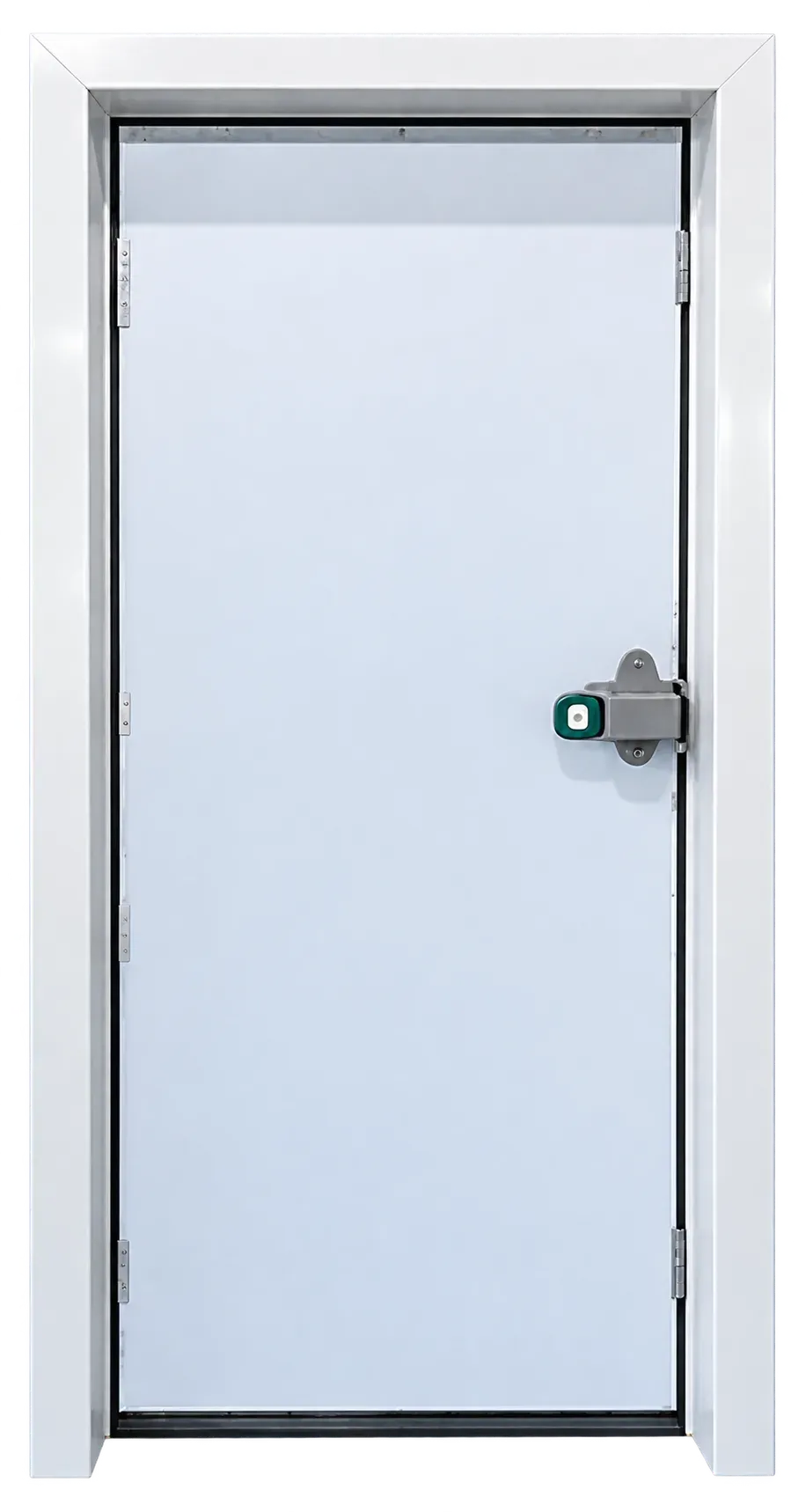
A hinged door needs space for the leaf to swing
Check opening direction and the leaf’s relationship to walls, equipment and aisles. The doorway must support routine use without moving stored goods or equipment each time access is needed. The catalogue includes an insulated hinged cold room door. Use the listing to identify the product category, then request the proposed clear opening, leaf thickness, hardware and approved operating conditions.
A sliding door needs lateral space and a suitable travel path
A sliding leaf travels alongside the wall. Confirm space for the leaf, track and hardware, including possible conflicts with pipes, switches or storage. Check access to the mechanism for inspection and maintenance. Discuss the SWEST insulated sliding door as an option for the site. A large opening alone does not settle the choice; compare movement, closing arrangements and the available installation space.
03Review insulation and sealing as a complete assembly
Thickness alone does not describe the door
Request the insulation material, leaf thickness, frame, gaskets, threshold and wall-interface details. Discuss how joints and penetrations will be finished and how closing alignment will be checked after installation. Entering air is one source of refrigerated-space load in the ASHRAE load reference. Review sealing and access patterns alongside insulation, without assuming a universal energy-saving percentage.
Specify temperatures and conditions on both sides
Provide the room’s operating temperature and the conditions outside it, including nearby washing, receiving or conditioned areas. Ask for suitable gaskets, finishes and hardware rather than relying on the phrase “insulated door.” For low-temperature applications, discuss frame or threshold heating where required by the selected design. Eurocold lists heating and gasket options for its doors. This illustrates variation between assemblies; it is not an automatic SWEST specification or a requirement for every room.
04Include safety and serviceable hardware in the purchase
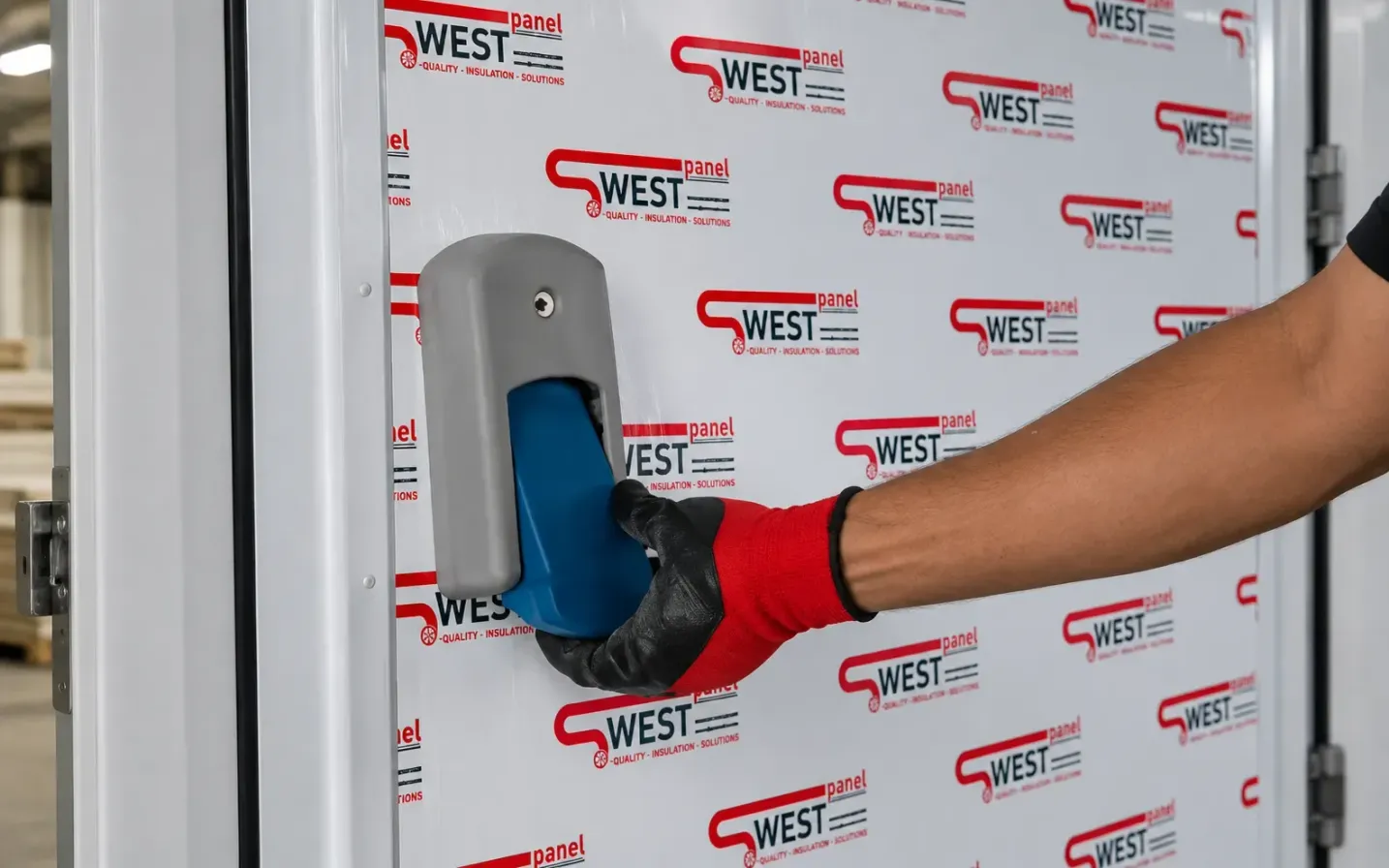
Confirm the internal opening arrangement
Ask how the door can be opened from inside when locked externally, and how that feature is operated and checked under the supplier’s instructions as part of the project safety review. FERMOD documents an internal safety-release lock, but the actual equipment in your quotation must be confirmed. Discuss staff procedures and alarm needs appropriate to the business. A catalogue photograph of a handle does not prove that a particular safety function is included.
Check replacement parts and service access
Record the hinge or track, roller, handle and gasket models, and how replacements can be ordered. Review protection against handling-equipment impacts and access for cleaning seals and thresholds. For a replacement door, send photographs of the existing frame, threshold and fixing arrangement. Describe rubbing, damage or closing problems. Replacing the leaf alone may not resolve a fault caused by the frame or installation.
05Cold room door prices: compare quotations and handover checks
Request the same scope from each supplier
Specify door type, clear opening, swing direction or sliding side, operating temperature, insulation and finish, frame and threshold, seals, hardware, heating if required, and supply, installation and electrical scope. Include exclusions, tax, timing and written warranty terms. If the door is part of a complete room, the cold room quotation comparison guide helps separate product supply from a completed operational installation.
Check the intended use at handover
Agree to inspect clear opening, smooth movement, closing alignment, aisle conflicts and the specified hardware and safety functions. Review operation, maintenance and connections against the selected model’s instructions, recording outstanding items before acceptance. Where appropriate, test the intended trolley or handling-equipment movement under an agreed safe procedure. Opening an empty doorway does not by itself establish that loaded goods can move through the site conveniently.
06Questions before choosing a cold room door
Is a sliding door always better?
Neither arrangement is universally better. Sliding doors need lateral travel space and suitable running gear; hinged doors need a swing area. Both still need appropriate insulation, closure, safety provisions and operating-temperature suitability. Choose around the actual handling layout.
Can you obtain a price before a site visit?
Photographs, a layout and clear dimensions can support an initial quotation with stated assumptions and items requiring site confirmation. Send the project location, photographs of both sides, operating temperature, maximum load dimensions, handling method and expected access frequency. Use these details to request a cold room door quotation from SWEST, stating whether the project is a new installation or an existing door replacement. A defined opening, duty and hardware scope make the quotation more useful.
Have a project like this? Our engineering team in Jeddah runs the load calculation, proposes the solution, and comes back with a detailed quotation within one working day.
Read next

Steel vs Plastic Pallets for Refrigerated Warehouses: A Buyer's Comparison
Compare steel and plastic pallets by storage method, load, racking, handling, cleaning and lifetime cost.
Read the article
Preparing Pharmaceutical Transport Vehicles in Saudi Arabia
Review medicinal product conditions, insulation, refrigeration, monitoring and vehicle qualification before requesting a conversion quotation.
Read the article