
Cold Rooms vs Freezer Rooms: Which Does Your Business Need?
The difference between a cold room and a freezer room starts with the product condition you need to maintain. A cooler serves chilled storage; a freezer room serves the specified frozen-storage duty. Another important distinction is storing goods that arrive frozen versus freezing incoming products. Define the task before selecting the room, insulation and equipment.
01Start with the storage condition the products need
A cold room serves chilled storage
List the goods, their specified storage conditions, expected holding periods and condition on arrival. Where the task is to keep goods chilled without freezing them, state this explicitly, including differences between product categories. Discuss these requirements through the cold room and freezer room service. The business category alone does not define the room: one restaurant or shop may handle products with different storage requirements.
Define the freezer room’s actual duty
The ASHRAE refrigerated-facility design reference distinguishes coolers from low-temperature storage and considers the effect of incoming goods on design. State whether products arrive frozen or enter the room to be frozen. Separate the required storage condition from the receiving temperature in the quotation request. “Freezer” on an offer does not by itself describe the quantity or process for which the system was selected.
02Distinguish frozen storage from freezing a batch
Storing goods that arrive frozen
For a store receiving frozen stock, describe expected receiving temperatures, daily quantities, holding periods and access patterns. The task is to define how the product’s condition will be maintained during handling and storage. A room receiving ready-for-storage deliveries has a different project brief from one receiving warm production batches. Record the distinction so proposed equipment can be compared against a stated operation.
Freezing incoming goods needs a quantity and time target
For product freezing, give the designer batch weights, pack dimensions, receiving temperatures, required outcome and target time. Explain loading arrangements and whether a new batch arrives before the previous one is complete. Request a statement of the proposed solution’s suitability for that duty and its conditions. Room volume or a low controller setting alone does not establish that any quantity can be frozen within a particular time.
03Specify the envelope, doors and floor together
Define the complete insulation arrangement
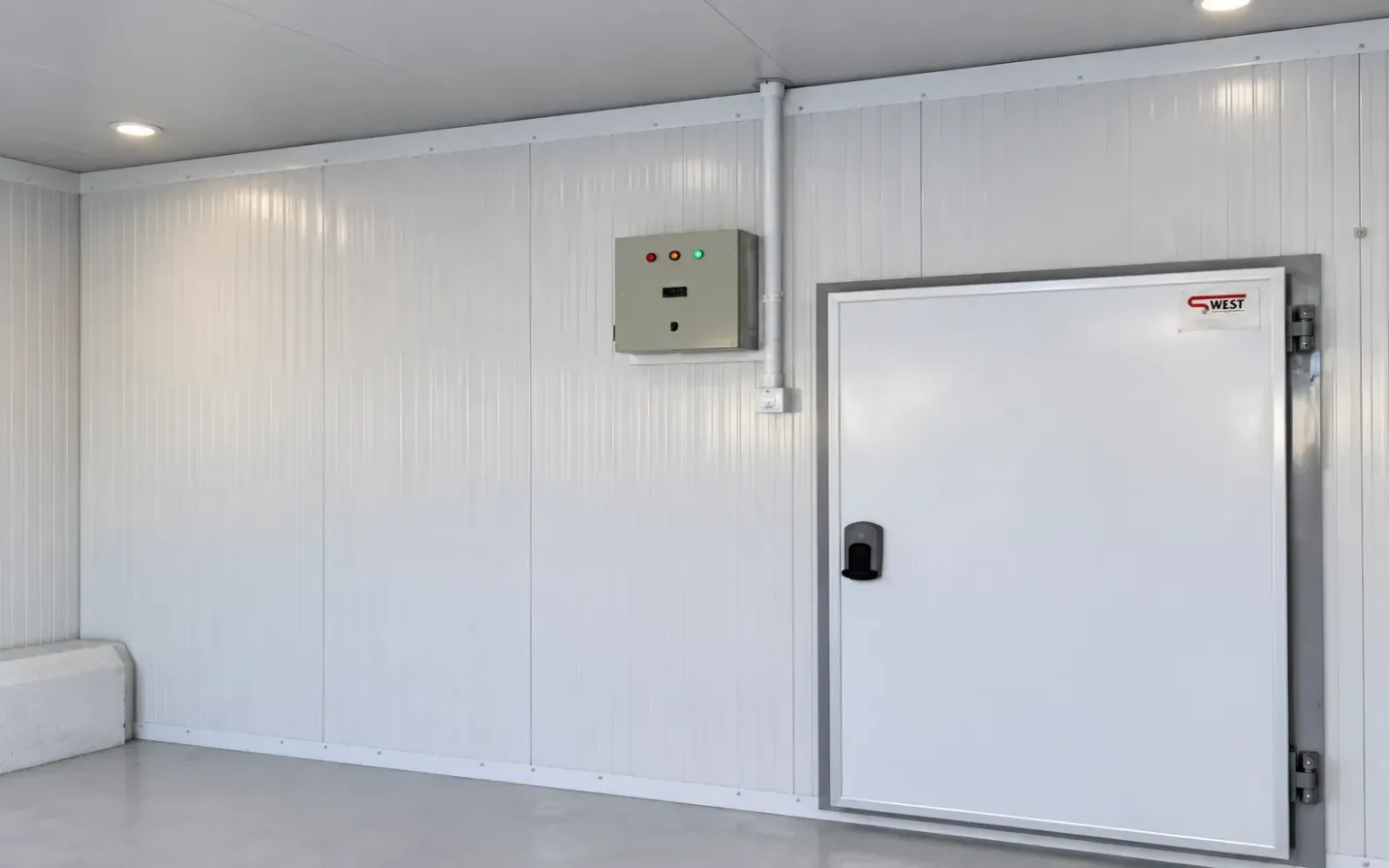
Request wall, ceiling and floor details, insulation material and thickness, joints, penetrations and finishes. Review these against operating conditions, the surrounding environment and handling requirements within one design. The catalogue includes insulated sandwich panels, but a panel selection does not define the complete room. Request installation drawings, interface details and the floor works included in the offer.
Match door access to handling
Specify the largest load, handling equipment, movement direction and access frequency. Review clear opening, closure, seals and proposed hardware with the supplier, including installation and handover checks. The insulated hinged-door category can help identify the product for discussion. Review floor suitability for loads, cleaning and the site duty as well; wall-panel thickness is only one part of the comparison.
04Review equipment selection and control
Request capacity at the actual selection conditions
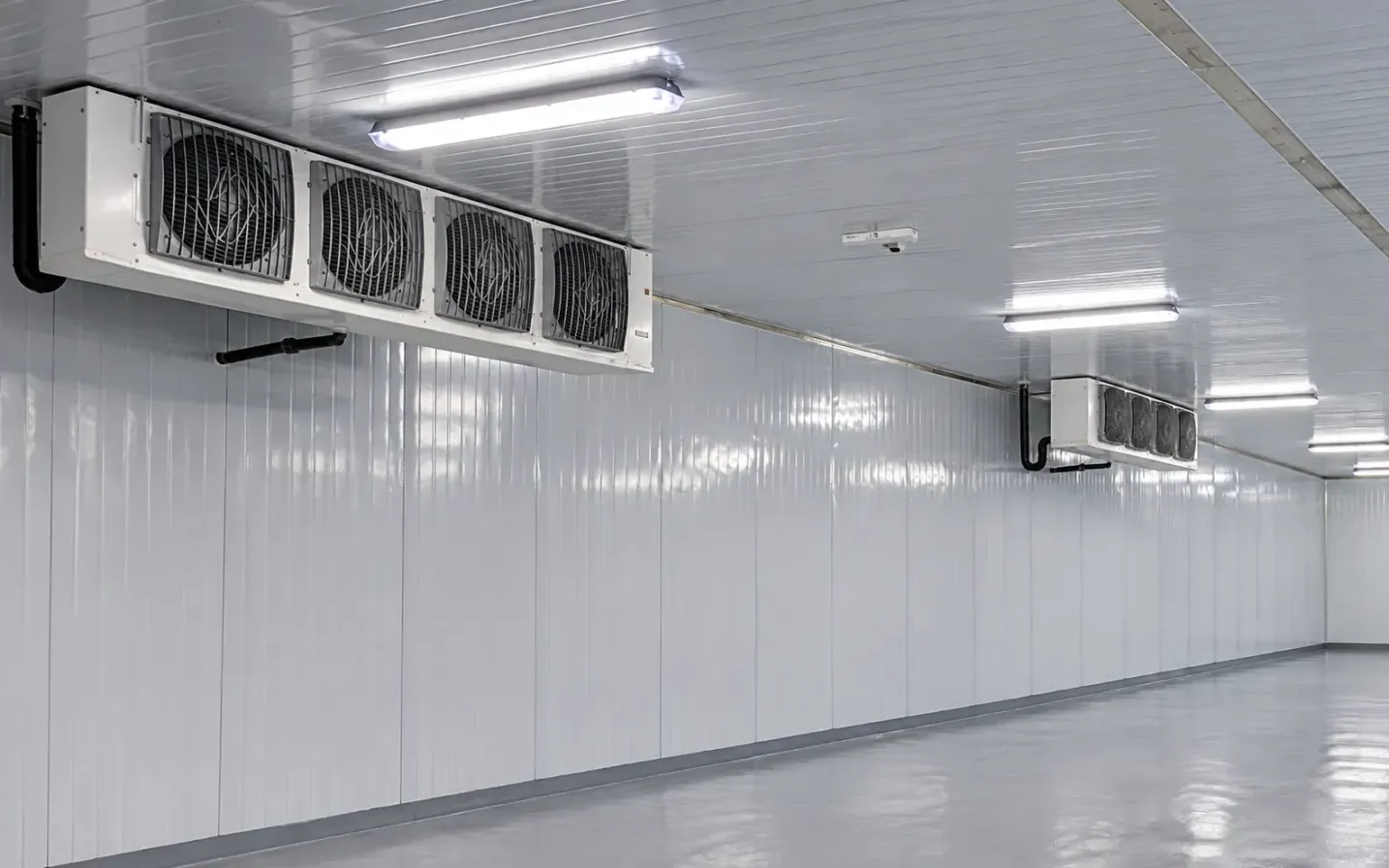
Ask for the unit and evaporator models, performance at project conditions, and assumptions covering insulation, incoming goods, access and equipment location. A capacity figure alone does not explain those details. Where a cooler offer and a freezer offer use different equipment, ask how that relates to the required duty. Link components to stated operating data rather than selecting the largest number or the cheapest abbreviated offer.
Agree on monitoring and operating arrangements
Discuss temperature measurement positions, records, alarms and any defrost provision required by the selected system. Identify who reviews readings, how issues are reported and what the supplier provides at startup. Document loading, cleaning, inspection and service instructions. This gives the operating team a clear brief for the installed room and a record to consult when performance appears to change.
05Consider one room versus separate storage zones
Group products by their storage requirements
Set out each product category’s storage conditions, holding time, packaging and handling needs. Where requirements differ, discuss suitable rooms or zones rather than assuming one setting serves every item. Show typical stock and peak stock, and identify what must remain accessible during cleaning or maintenance. These details help compare operating arrangements alongside the available footprint and budget.
Discuss future changes before construction
If you expect to change from chilled to frozen use, state this at the beginning. Ask what it requires of the envelope, floor, door, equipment and electrical installation rather than assuming a controller change or replacement unit is sufficient. Request documented operating limits and the changes needed for each scenario. Expansion or conversion is easier to assess when its requirements appear in the design and quotation.
06Prepare a comparable quotation request
Compare duty and scope before the total
Standardise the duty, internal dimensions, incoming product condition and operating requirements. Then compare the envelope, floor, door, equipment, controls, site works and testing, including delivery, installation, tax, exclusions and warranty terms. The cold room quotation comparison guide helps organise the items. Different prices for similar floor areas should prompt a review of equipment, work scope and operating task.
Send a product and site brief
Provide product types, weights, packaging, receiving condition and holding periods, together with plans, photographs, operating requirements, handling routes and electrical information. Clearly state chilled storage, frozen storage or batch freezing. Use these details to request a cold room or freezer quotation from SWEST. Ask for the selection basis, supply boundaries and handover plan so each supplier responds to the same task.
Have a project like this? Our engineering team in Jeddah runs the load calculation, proposes the solution, and comes back with a detailed quotation within one working day.
Read next
Steel vs Plastic Pallets for Refrigerated Warehouses: A Buyer's Comparison
Compare steel and plastic pallets by storage method, load, racking, handling, cleaning and lifetime cost.
Read the article
Preparing Pharmaceutical Transport Vehicles in Saudi Arabia
Review medicinal product conditions, insulation, refrigeration, monitoring and vehicle qualification before requesting a conversion quotation.
Read the article