
Display Fridges for Shops and Grocery Stores: A Practical Buying Guide
Choosing display fridges for a shop or grocery store starts with the products and store conditions, followed by dimensions and customer access. Door count and stated capacity do not describe the complete requirement. Define usable display space, aisle movement, the correct chilling or freezing configuration, and practical arrangements for replenishment and cleaning.
01Define the products and replenishment routine
Identify what the cabinet will display
List product categories, pack dimensions and storage requirements specified for the goods and business. Drinks, large food packs and frozen products create different display requirements. Tell the supplier whether stock arrives already chilled or needs separate preparation before display. Review SWEST commercial display refrigerators, then request confirmation for the proposed model and intended use. A temperature range describing a product family does not establish that every cabinet provides both chilling and freezing.
Plan usable shelf space from the packs
Sketch the assortment, facings per item, pack heights and access needed for restocking. Trial the arrangement with actual packs or their dimensions rather than selecting from litres alone. Define the stock needed between replenishment rounds. If the shop has back-room storage, coordinate the display with its cold room or freezer room so the selling cabinet does not become an overcrowded stockroom.
02Compare glass doors with open display
Review door access and shelving together
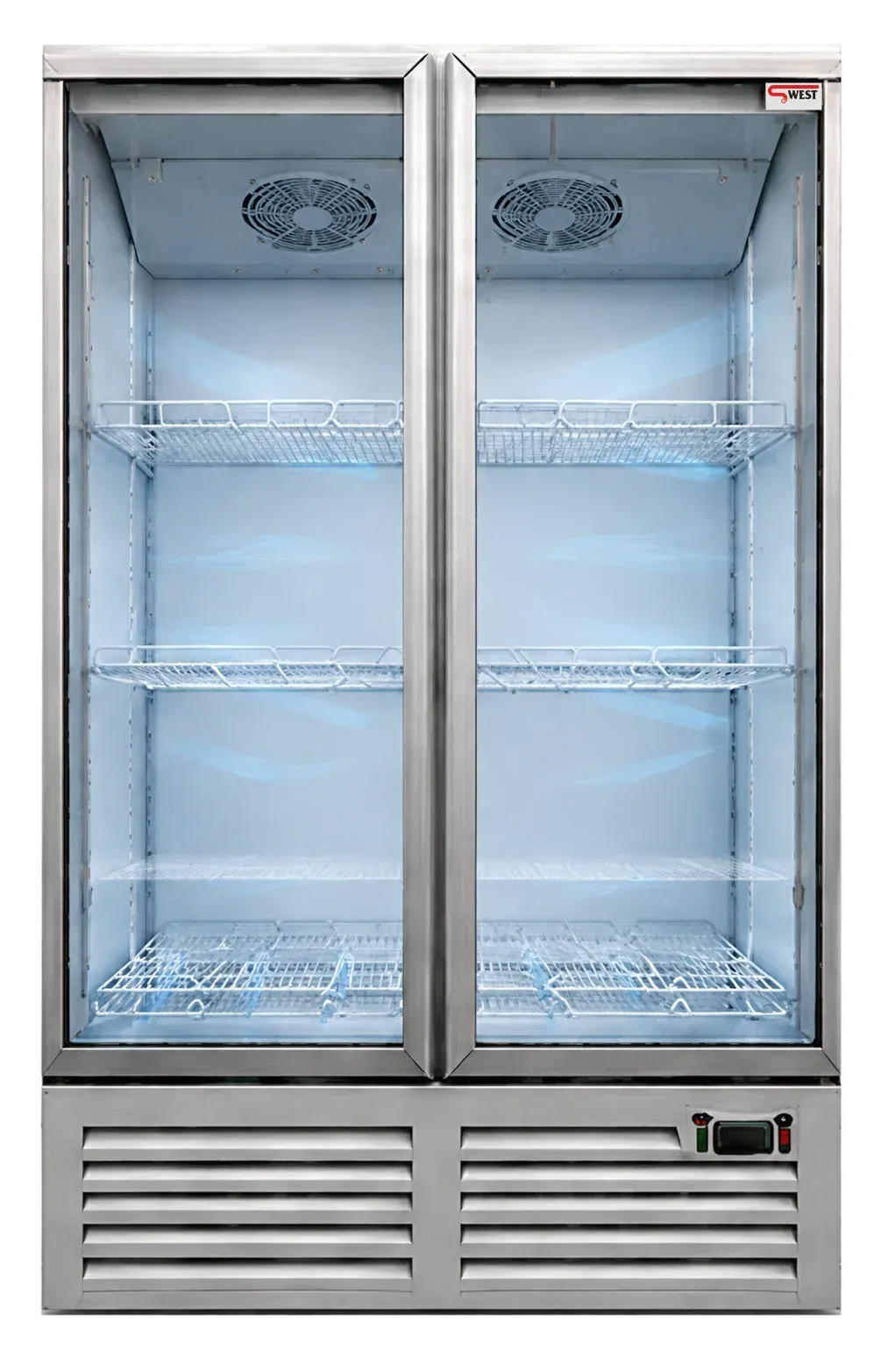
Compare door width, swing direction and access to the shelves at each end. Consider where customers and baskets will stand, and whether staff can replenish the cabinet without blocking the aisle. The catalogue includes an upright refrigerator with two glass doors. Use it to identify the category, then request dimensions, shelf arrangement and operating data for the actual model being offered.
Include the location when considering open display
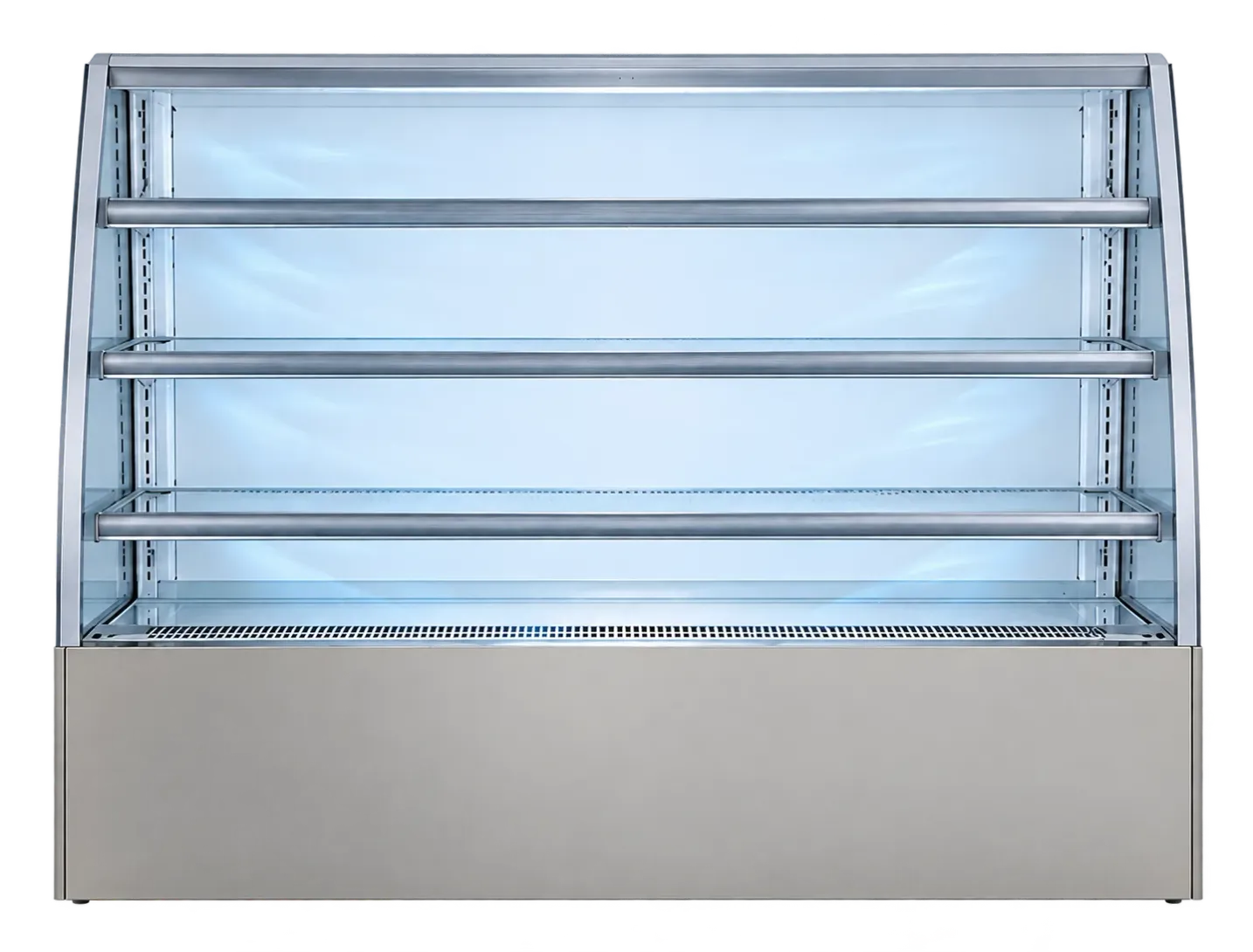
An open upright display refrigerator provides direct product access. Send the supplier a layout showing entrances, air-conditioning outlets, fans and nearby heat sources when discussing this option. A Hussmann display-case manual explains the importance of store conditions and avoiding disruptive air currents. Apply the requirements of the cabinet being purchased; do not transfer another model’s clearances or operating limits to it.
03Check both installation space and the delivery route
Measure the route as well as the final position
Record the available width, depth and height, then follow the route from unloading to installation. Check doorways, turns, corridors and level changes. Request shipping dimensions, handling requirements and details of parts that can be removed for transport. Allow for door movement, service access and the supplier’s installation clearances. An advertising photograph showing a cabinet against a wall is not an installation drawing for your site.
Photograph the surrounding conditions
Provide pictures of the proposed position, supply-air outlets, nearby heat sources and electrical connection. Include opening hours and replenishment times, stating whether store air conditioning stops overnight. This information lets the supplier explain the proposed configuration and its operating limits. For a new fit-out, coordinate the cabinet layout with the central air-conditioning team before finalising outlets and finishes.
04Arrange stock around the designed airflow
Agree on loading limits before operation
Ask the supplier to identify loading limits and the cabinet’s air discharge and return openings. The Hussmann instructions referenced above explain why the load line and vents must remain clear. Show staff where these areas are before adding stock or price labels. Check shelf load limits and weight distribution against model-specific instructions. Additional shelves or promotional dividers need approval where they could change airflow or access.
Make cleaning and issue reporting practical
Review shelf removal and access to corners, handles and seals. Specify cleaning products and methods in line with the operating instructions, and distinguish routine shop tasks from technical service work. Ask how the model is serviced, which replacement items may be needed and who provides support. Keep a simple record of recurring issues such as difficult closure or water accumulation, alongside the cleaning routine.
05Compare quotations on a defined specification
Identify the complete cabinet being supplied
Request the model, dimensions, chilling or freezing configuration, door and shelf counts, electrical requirements, declared operating conditions, controls and lighting. Include transport, unloading, installation, commissioning, tax and exclusions. When a supplier proposes an alternative, ask what changes in usable display area, materials or refrigeration configuration. This makes price differences easier to assess than comparing door counts alone.
Request energy data and handover checks
Where energy-consumption data is available, review its measurement conditions and intended use. An efficiency claim alone does not establish a monthly electricity cost for a shop operating under different conditions. Agree on checks for dimensions, doors, shelving, lighting, closure and operation at handover. Include operating instructions, written warranty terms and a way to record outstanding items before the sales team begins using the cabinet.
06Questions before ordering a shop display fridge
Should you buy the largest cabinet that fits?
Choose usable display space around the assortment, replenishment routine and customer movement, while reviewing operating conditions and service access. Some shops benefit from distributed displays; others need one continuous frontage. Start with the present requirement and expansion options, then compare available sizes. A larger cabinet does not by itself establish a better selling layout or effective use of every shelf.
What information supports a useful quotation?
Send the business and product types, pack dimensions, available space, site and access-route photographs, preferred display configuration, operating hours and electrical details. Add an initial shelf layout where the assortment needs a particular arrangement. Use these details to request a display-fridge quotation from SWEST. Ask for the proposed model, its specification and the complete supply scope so the comparison starts with an identifiable cabinet.
Have a project like this? Our engineering team in Jeddah runs the load calculation, proposes the solution, and comes back with a detailed quotation within one working day.
Read next

Steel vs Plastic Pallets for Refrigerated Warehouses: A Buyer's Comparison
Compare steel and plastic pallets by storage method, load, racking, handling, cleaning and lifetime cost.
Read the article
Preparing Pharmaceutical Transport Vehicles in Saudi Arabia
Review medicinal product conditions, insulation, refrigeration, monitoring and vehicle qualification before requesting a conversion quotation.
Read the article