
Roof-Mounted or Front-Mounted Vehicle Refrigeration? A Fitment Guide
Two transport refrigeration units may meet a similar duty on paper while fitting a vehicle or distribution route very differently. Compare the external unit position, vehicle clearances and condenser airflow before confirming the model. Use the checks below to brief your supplier and assess the complete installation.
01Locate the external unit and evaporator
Roof mounting above the vehicle
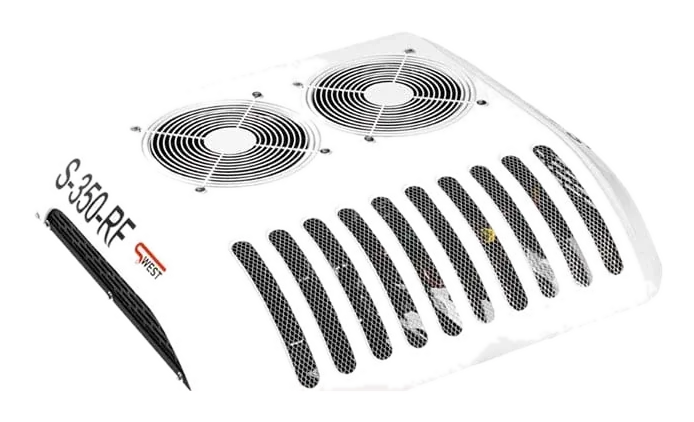
A roof-mounted configuration places the external unit on the roof in accordance with the vehicle and equipment design. See the S-350-RF roof-mounted unit as a catalogue example, then request a fitment drawing showing the installed dimensions, cover clearances and line routes.
Front mounting on the cargo box
A front-mounted configuration places the external unit on the front of the cargo box, near the cab. The Thermo King installation guide illustrates the two configurations for its models. Request the drawing for the unit actually quoted.
02Measure the vehicle along its route
Record overall height and restricted entrances
Measure the proposed overall height including the unit, supports and protruding accessories. Compare it with warehouse entrances, parking structures and loading points the vehicle actually uses. Give the installer the limiting dimensions and photographs so that clearances can be assessed before procurement.
Check the gap between cab and body
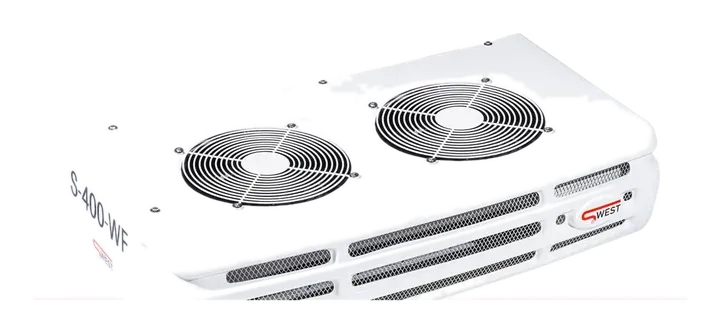
Map the available front face and nearby cab parts, accessories and covers. Review the S-400-WF front-mounted unit as a comparison point. Confirm whether service covers and fixing points can be reached with the unit fitted to your specific body.
03Check airflow and rated performance
Keep the condenser air path clear
Ask the installer to check air intake and discharge around the condenser, including nearby roof equipment or cab structures. A unit can physically fit while its air path is obstructed. Use the applicable installation guidance and request a drawing showing surrounding components.
Request comparable capacity data
Record target cargo conditions, insulated compartment dimensions, route and door-opening pattern. Ask for capacity at stated conditions and in the operating mode you require. The vehicle refrigeration sizing guide explains what to collect before comparing models.
04Coordinate supports and service routes
Confirm suitable mounting points
Provide the vehicle and body model and details of previous modifications. Ask the installer to coordinate support and fixing points with the bodybuilder and manufacturer guidance. Include access for future inspection and clearance to adjacent components, especially when replacing an existing unit.
Define pipe, wiring and drain routes
Request the line, wiring and evaporator drain routes and how they pass through the insulated enclosure. Assign responsibility for sealing and protecting those routes. Inside the box, review evaporator position and loading layout so the intended airflow path remains available around the cargo.
05Plan access for maintenance
Review access for routine service
Discuss access to the external unit, evaporator and inspection points, including space and equipment needed by the technician. Ask about vehicle downtime and parts availability. The mounting position can change service arrangements even when the equipment dimensions are similar.
Agree on post-installation checks
Ask for checks covering mounting, clearances, line protection, drainage and controls. Define the test conditions and readings to be handed over. If stationary cooling is required, identify the power source and include a check of that operating mode for a compatible model.
06Compare quotations on a common basis
Compare the complete installation scope
Request the model, supports, lines, body modifications, testing and written warranty terms. Compare the effects on height, access and operating schedules. Discuss the scope with the vehicle insulation and refrigeration service before approving the fitment.
Send a brief for your vehicle
Provide photographs of the roof, cab, front of the box and interior, with compartment dimensions, overall height and clearance limits. Describe cargo, routes and any stationary operation. Request a SWEST quotation so the mounting arrangement and model can be checked together.
Have a project like this? Our engineering team in Jeddah runs the load calculation, proposes the solution, and comes back with a detailed quotation within one working day.
Read next

Steel vs Plastic Pallets for Refrigerated Warehouses: A Buyer's Comparison
Compare steel and plastic pallets by storage method, load, racking, handling, cleaning and lifetime cost.
Read the article
Preparing Pharmaceutical Transport Vehicles in Saudi Arabia
Review medicinal product conditions, insulation, refrigeration, monitoring and vehicle qualification before requesting a conversion quotation.
Read the article