
Vehicle Refrigeration Units: Choosing Capacity and Power Options
Choosing a commercial vehicle refrigeration unit starts with the transport duty: the product, required storage condition, internal body volume after insulation and the working day. A model name or headline capacity cannot describe all of these. This guide helps van and truck operators read specifications and choose a power arrangement before requesting a quotation.
01Prepare the transport brief before choosing equipment
Describe the product, body and delivery route
Record the goods, required storage condition, loading temperature, clear internal dimensions after insulation, and insulation and door condition. Include journey duration, delivery stops, door activity, parking periods and expected operating conditions. Two bodies of equal volume can have very different duties. For a complete conversion, start with the refrigerated vehicle conversion guide to define the insulation, body and installation scope. Use the resulting brief to discuss the refrigeration unit itself.
Distinguish load maintenance from product cooling
State whether the goods arrive at the required transport temperature or whether you expect the unit to reduce their temperature during the journey. A unit suitable for maintaining a conditioned load should not automatically be assumed capable of cooling or freezing a warm batch within a set time; that duty requires assessment. Use the same assumption in every quotation request. Offers based on different incoming product conditions do not provide a clear equipment comparison.
02How to read cooling capacity in a specification sheet
Compare capacity at stated rating conditions
Ask for cooling capacity in watts or kilowatts at a defined operating point, including ambient temperature, the air-temperature reference and operating mode. Cooling capacity is different from electrical consumption, and motor output alone does not describe the heat a unit can remove. For example, the Carrier Neos 200e specification states a 38°C ambient and separates 2°C and −18°C return-air conditions, as well as road and standby operation. This illustrates how rating conditions are presented; it is not a direct comparison with SWEST models or a claim that SWEST supplies that product.
Treat a body-volume range as an initial selection filter
A catalogue body-volume range needs to be reviewed against insulation, load, surroundings and door activity. Ask what assumptions support the range, then request confirmation against the actual vehicle and operating brief. Where a product page does not state all rating conditions, obtain the complete data sheet before approving the selection. Figures from different manufacturers or operating modes should not be ranked without checking that their conditions are comparable.
03Choose power options around parked operation
Vehicle-driven operation and electric standby
Some units use a compressor driven by the vehicle engine; other models add external electrical operation while parked. Establish whether refrigeration must continue with the engine off, where a suitable supply will be available and for how long. Check the required voltage, frequency, phases, electrical demand, connection and protection for the specific model, along with vehicle and site provisions. An electric option does not mean any outlet is suitable, or that standby capacity equals road-operation capacity.
When should you consider an independent engine?
An independent engine may suit truck duties that need operation separate from the vehicle engine. The decision also involves space, weight, mounting, fuel, maintenance and noise, alongside refrigeration capacity. A particular model may offer electric standby as well. For truck refrigeration and freezing projects, compare these arrangements against the actual route and working schedule. An independent unit is not automatically the right upgrade for every vehicle or fleet.
04Reading examples from the SWEST catalogue
S-200-RE: distinguish the two operating modes
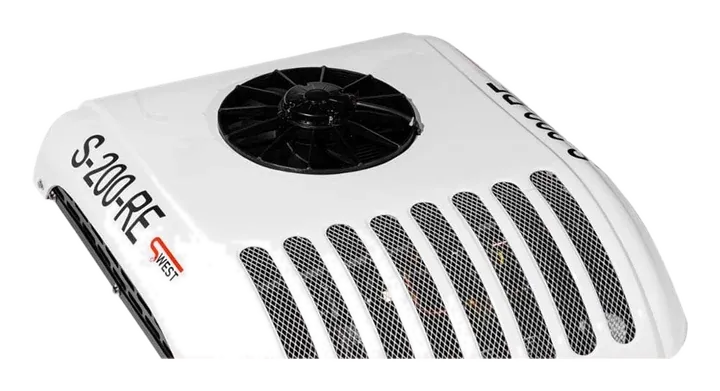
The SWEST S-200-RE combines vehicle-compressor operation with mains operation while parked. Its product page lists 2,153 W at 0°C and 1,103 W at −20°C, a 5–10 m³ body range, and capacity on mains of 1,838 / 982 W. These are catalogue figures rather than automatic approval for every body within that range. Request the capacity for the intended mode. The text page does not state all ambient test conditions; obtain those details and confirm the ordering of the mains capacity points before comparing or approving the unit.
SD-600E: independent diesel with a mains option
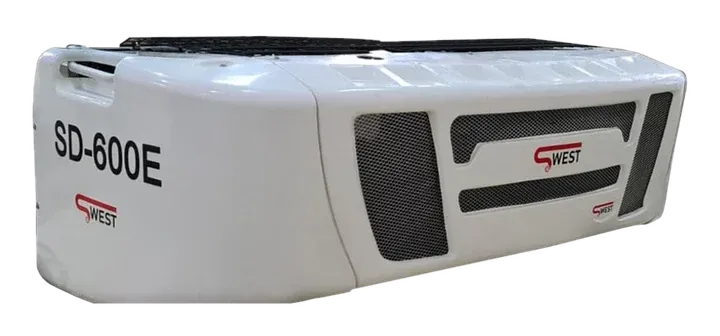
The SWEST SD-600E lists an independent diesel engine and mains option, with 6,258 W at 0°C, 3,945 W at −20°C and a 20–25 m³ body range. Listed mains capacity is 6,050 / 3,905 W. Comparing its headline figure with a smaller model does not establish suitability: the vehicle class, load and installation requirements differ. Confirm the rating conditions and transport duty, and use the volume range alongside a selection review.
05Compare installation and service scope as well as the unit
Check condenser position, evaporator layout and vehicle fit
Review roof or nose mounting, clearances, weight, supports, evaporator position and return-air paths with the supplier. Consider how the layout affects loading. Mounting details and clearances should come from the specific unit and vehicle instructions rather than another project’s photograph. A refrigerated van conversion needs the unit, insulation, doors and connections to work together. Finding a suitable model in a catalogue does not replace reviewing its integration into the completed vehicle.
Request written supply, testing and maintenance details
Confirm whether the price includes the unit, evaporator, compressor, mounting accessories, wiring, hoses, controls, standby option, fit-out work and testing as applicable. Check exclusions, tax, lead time, warranty and service availability rather than assuming every offer has the same scope. Agree on acceptance testing, load condition, ambient conditions and pass criteria. The vehicle refrigeration maintenance guide explains routine follow-up considerations; actual procedures and intervals should follow the selected model’s instructions and operating conditions.
06Final questions before approving a model
Is the highest capacity or lowest price the best choice?
The best choice meets the required duty with a suitable installation and operating arrangement. Added capacity does not automatically correct poor insulation, leaking doors or obstructed airflow. A lower quote may also exclude standby capability, accessories or essential installation work. Compare at one agreed operating condition, with clear rating assumptions and a common installation scope. Discuss operating and maintenance costs using identifiable data and assumptions rather than general savings promises.
What should you send for a selection and quotation?
Send the vehicle type and model, body photographs and internal dimensions after insulation, insulation and door details, product type and loading and storage temperatures. Add the delivery schedule, door-opening activity, parked hours, standby needs and available supply specifications. Use these details to request a selection review and quotation from SWEST, including any models you are considering. Define the transport duty and selection conditions first, then compare equipment and fit-out proposals against that brief.
Have a project like this? Our engineering team in Jeddah runs the load calculation, proposes the solution, and comes back with a detailed quotation within one working day.
Read next

Steel vs Plastic Pallets for Refrigerated Warehouses: A Buyer's Comparison
Compare steel and plastic pallets by storage method, load, racking, handling, cleaning and lifetime cost.
Read the article
Preparing Pharmaceutical Transport Vehicles in Saudi Arabia
Review medicinal product conditions, insulation, refrigeration, monitoring and vehicle qualification before requesting a conversion quotation.
Read the article